Christchurch, known as the "Garden
City" of New Zealand, is a vibrant blend of urban innovation
and natural beauty. One of its most popular attractions is
the Christchurch Botanic Gardens, a sprawling oasis filled
with native plants, colorful flower beds, and tranquil
walking trails along the Avon River. The city also boasts
the iconic Christchurch Cathedral in the square of the same
name, an architectural marvel with a storied history and
striking Gothic Revival design. History comes alive at the
Canterbury Museum, where visitors can explore exhibits on
Maori cultures, Antarctic Expeditions, and local wildlife.
The Quake Museum documents the effect of the devastating
earthquake that his Christchurch on February 22, 2011. In
the downtown area New Regent Street and Riverside Market are
frequent haunts for food lovers. Just outside of town is the
Christchurch Gondola, offering panoramic views of the area
from Mount. Cavendish, including Lyttelton Harbor, the
gateway to Antartica. Our aim was to visit as many of these
as we could using the Christchurch Heritage Tram, which
starts its loop right outside the Fable Hotel.
Attractions
Christchurch
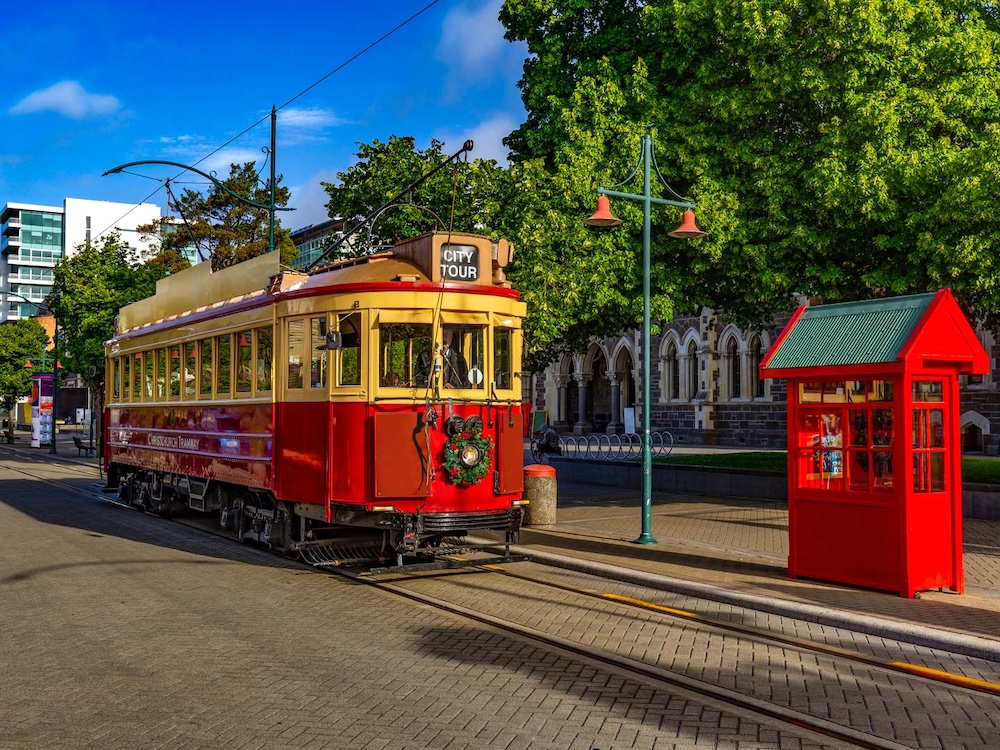
Heritage Tram is a beautifully restored heritage
tramway that operates in the heart of Christchurch, New
Zealand, and it dictated our itinerary for the day. It
offers a unique way to explore the city while experiencing a
touch of history. The
trams are lovingly restored models from the early 20th
century, featuring polished wood interiors, brass fittings,
and classic design. The tram drivers also
serve as tour guides as the tram weaves around the historic
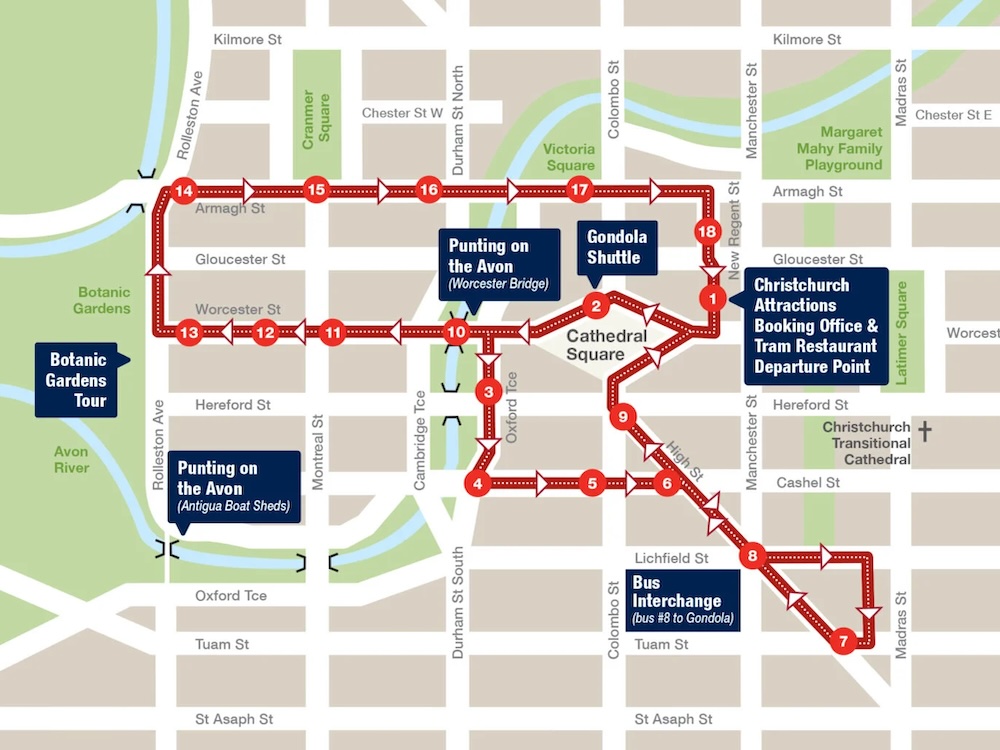
center of Christchurch, making 18 stops on its 50-minute route;
riders who purchase and all-day pass can hop on and off at any
point in the trip and there is short 18-20 minute interval
between trams. The photo to the left shows a map of the route,
and clicking on the photo will bring up a larger copy. Most of
the highlights of Christchurch are accessible from the tram,
including the Botanic Gardens, the Christchurch Gondola, the
Canterbury "Pop-Up" Museum, the Quake City Museum, New Regent
Street, and the Riverside Market. The "Cardboard Cathedral" is
only 2 blocks from the #9 stop. The tram is an excellent way to
see all that Christchurch has to offer. Below is a 360 video by
Ashley
Harvey showing the interior of the tram.
Christchurch Tram 360 Video by Ashley
Harvey
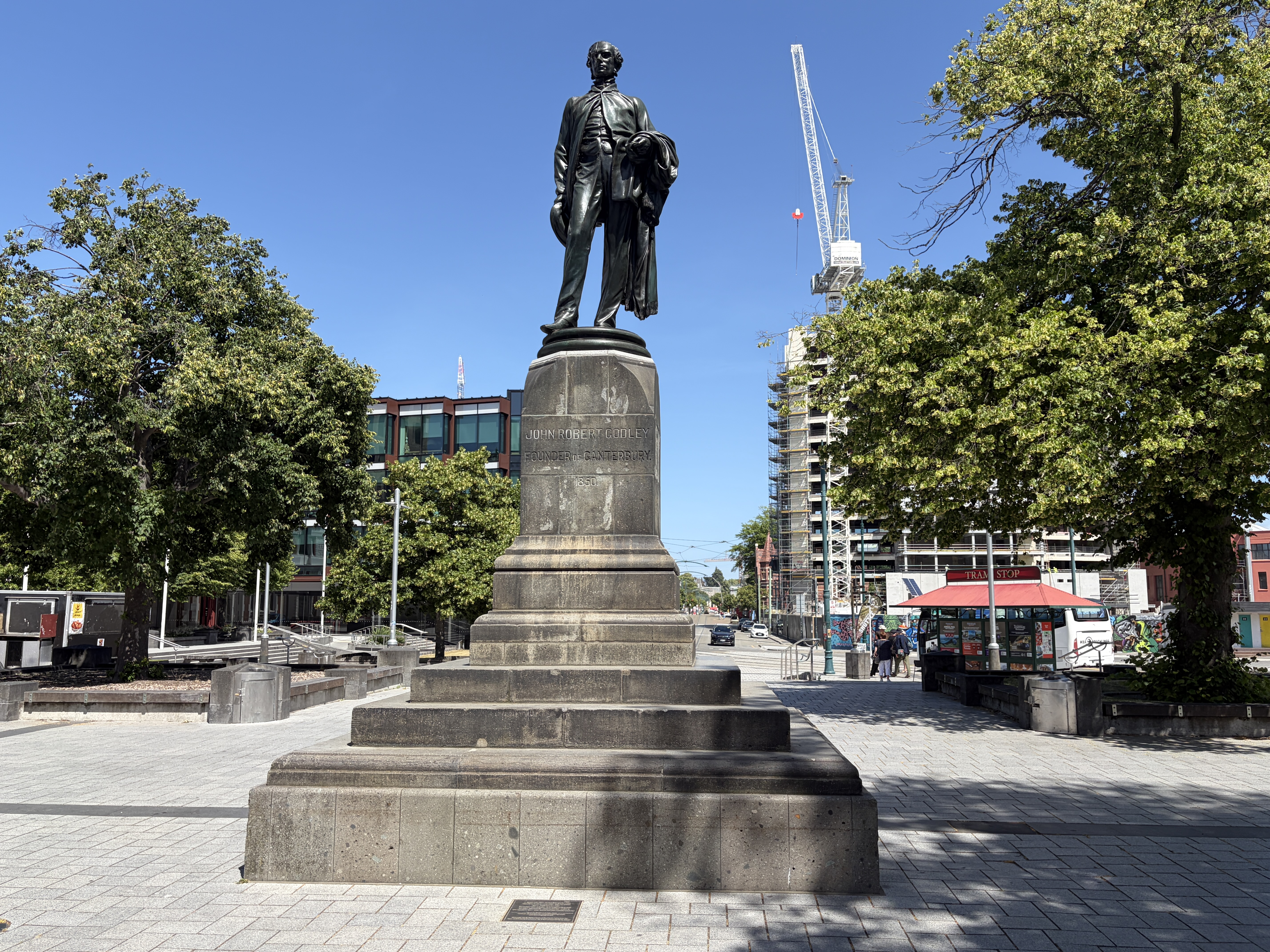
Attractions Cathedral Square We boarded the
tram outside the Fable Hotel and got off at the first stop,
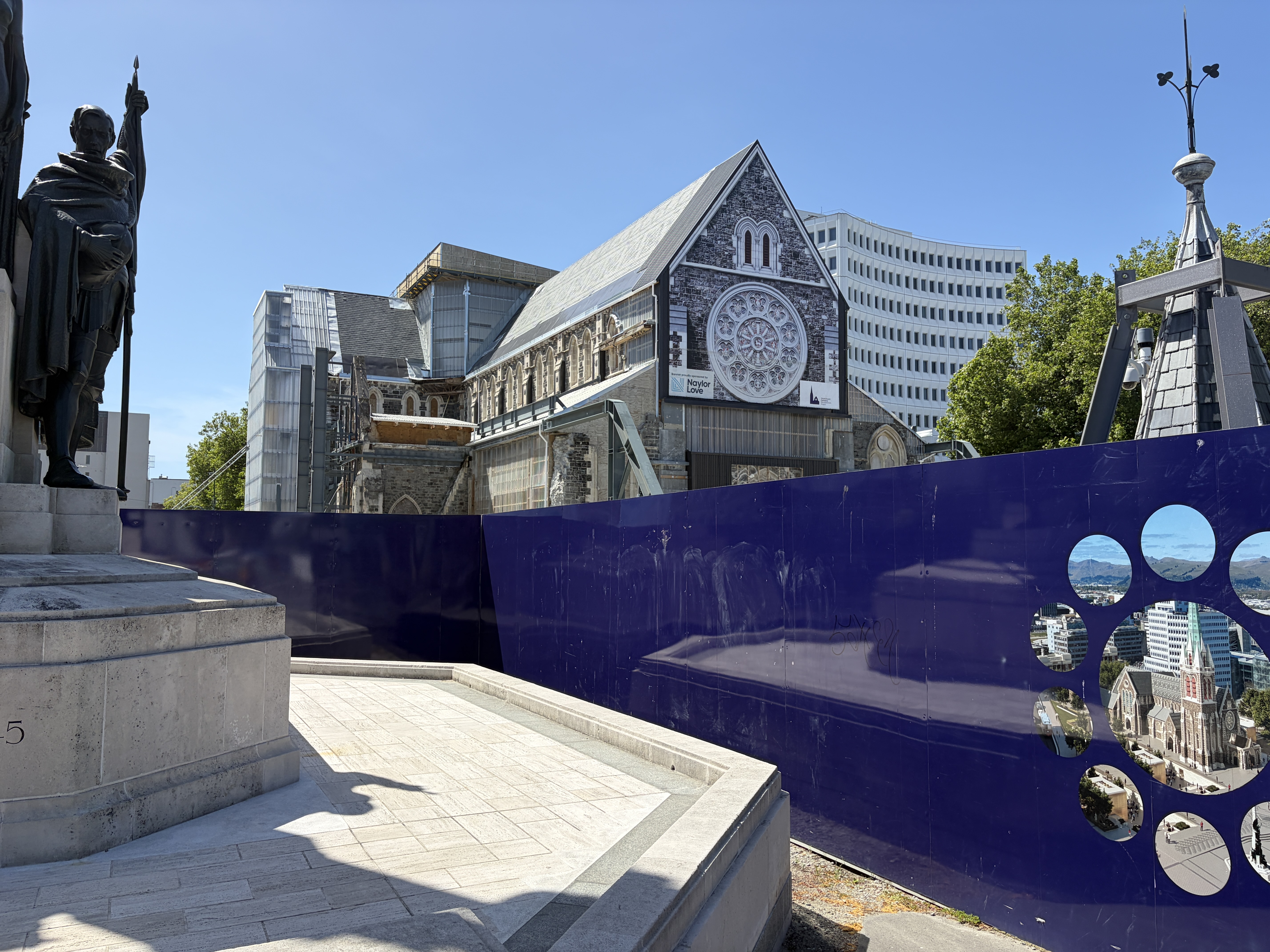
Cathedral Square. Unfortunately, the Cathedral was largely
covered as it was undergoing restoration. Due to the damage by
the 2011 earthquake, a temporary church was erected several
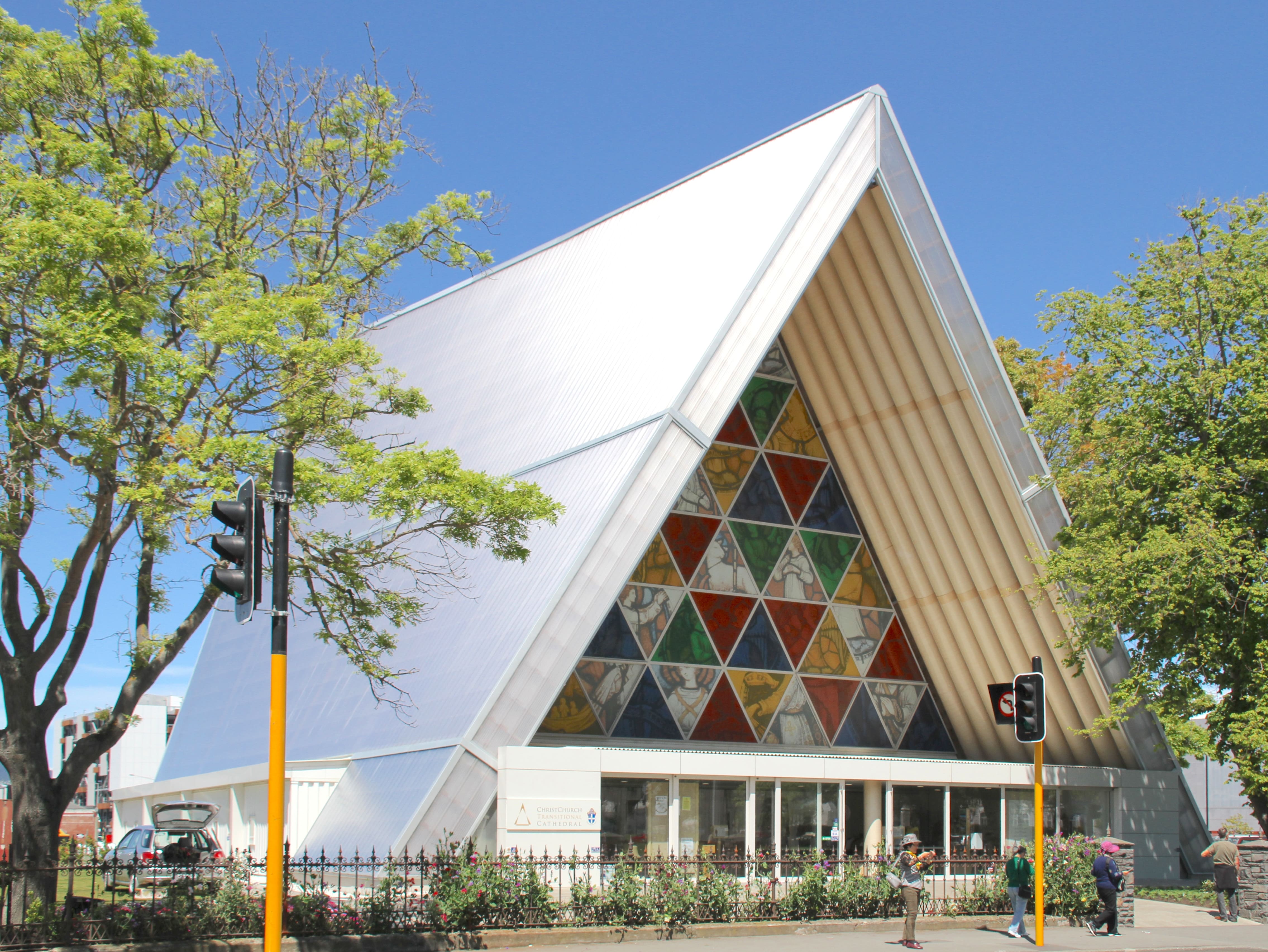
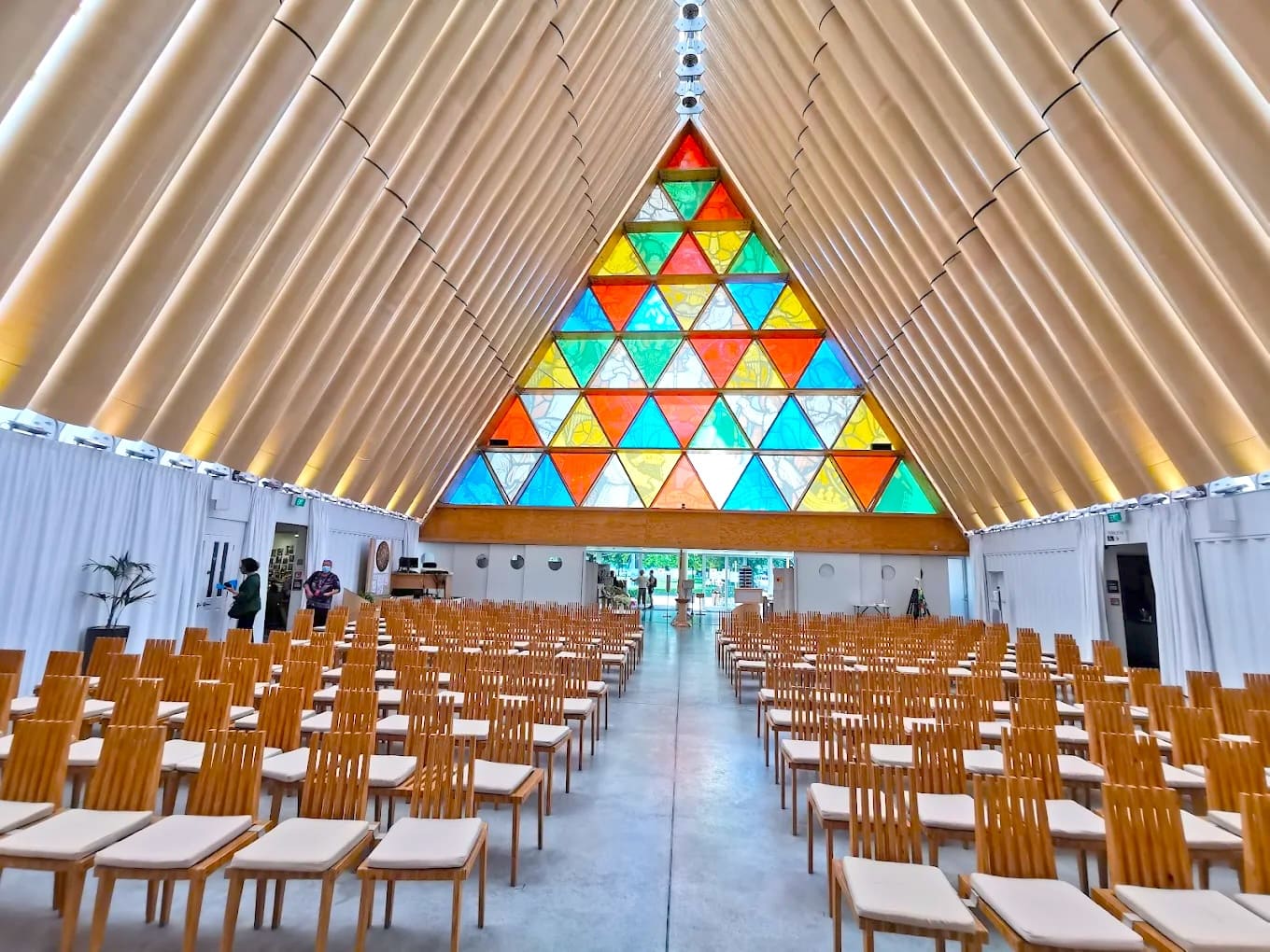
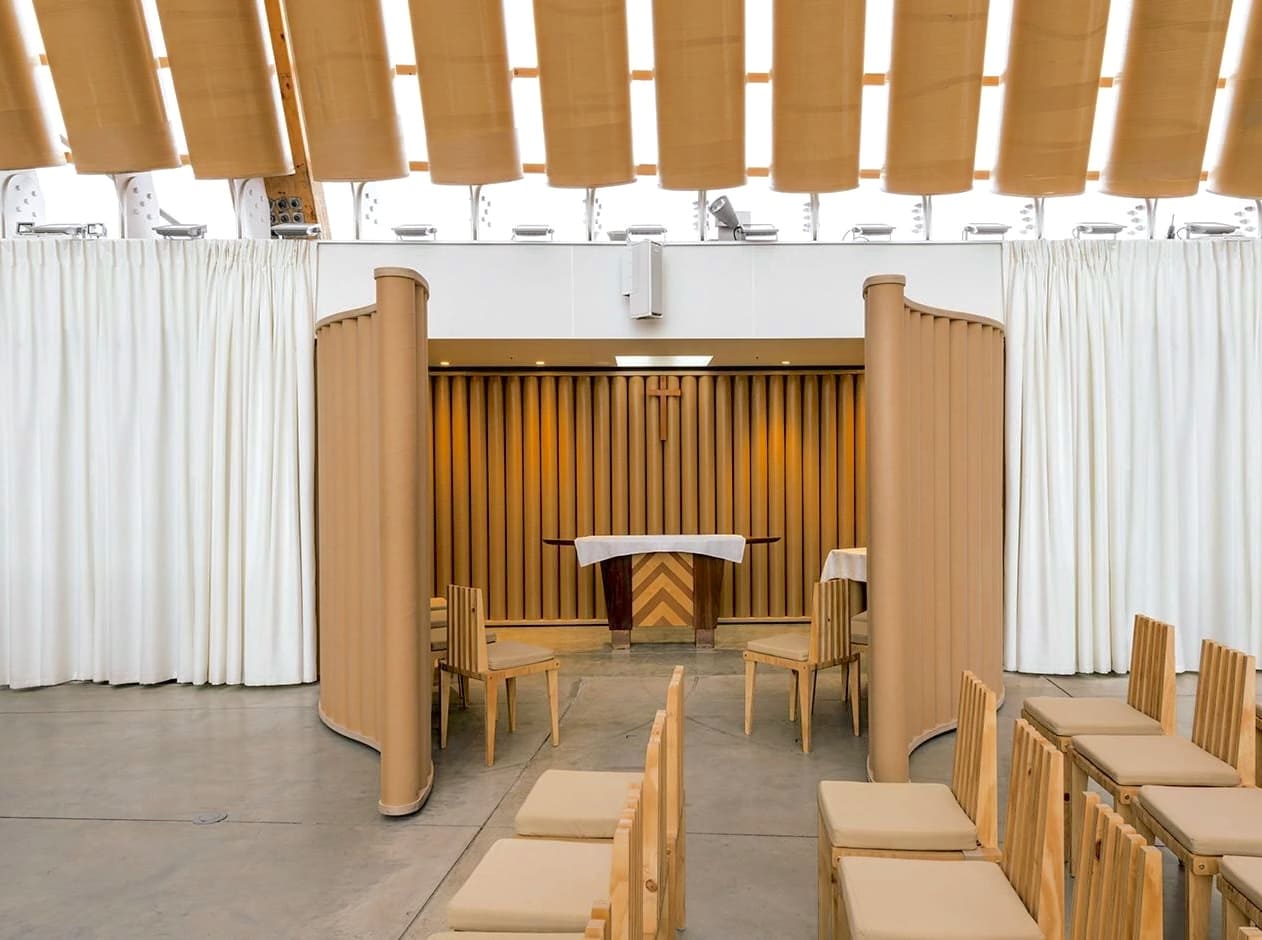
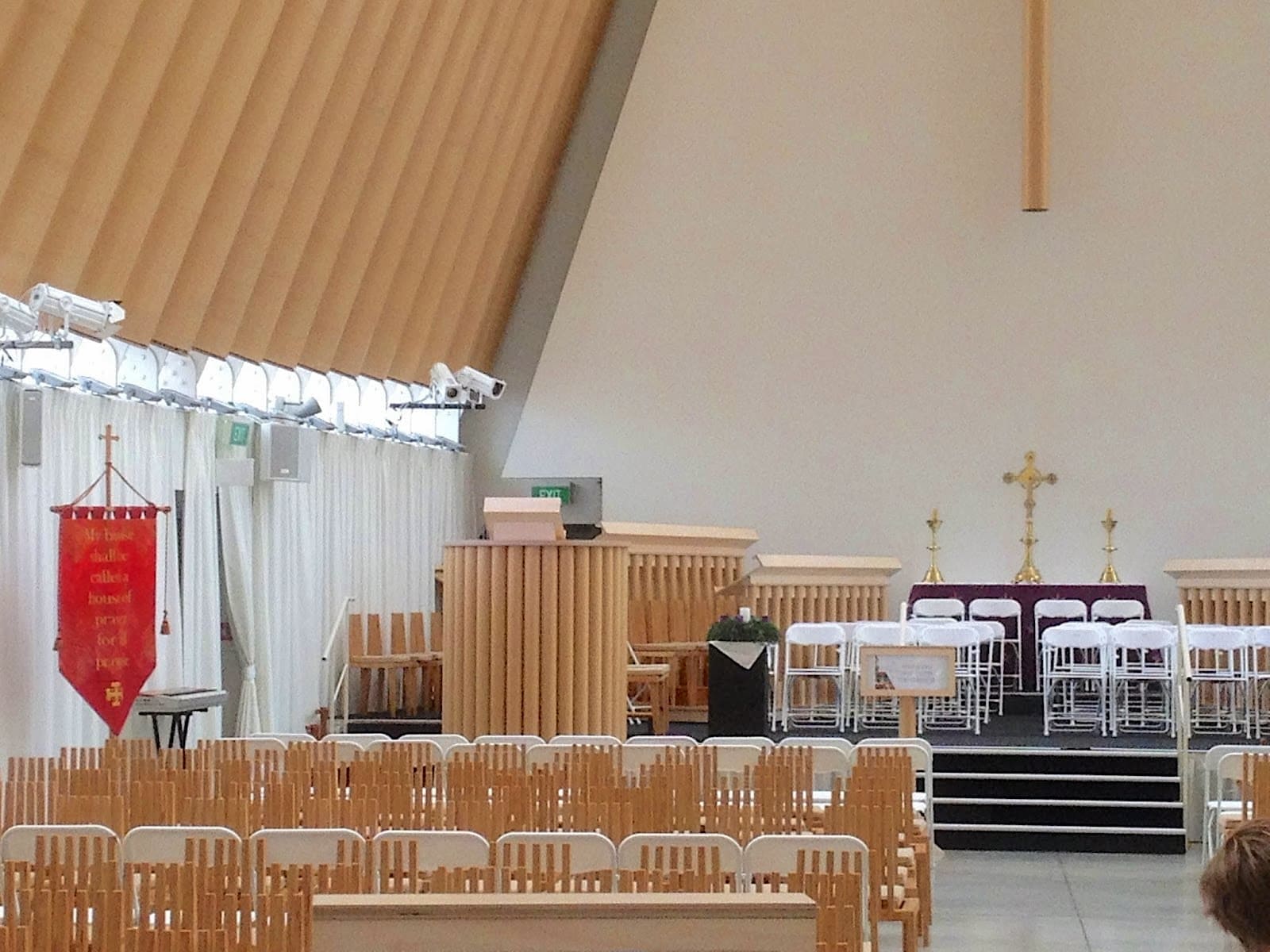
blocks away. It informally known as the "Cardboard Cathedral"
as the Japanese architect Shigeru Ban used over 90 large
cardboard tubes for its walls and roofs. We were able to get a
glimpse of it during the bus ride from Cathedral Square to the
Christchurch Gondola. Below is a video by DwellScape
explaining the significance of the Cardboard Cathedral.
Below that is a small photo gallery of the Cathedral.
Cardboard Cathedral: A Symbol of Hope
The
Cardboard Cathedral (click on photo to enlarge)
Cardboard
Cathedral
Interior
Side Chapel
Pulpit
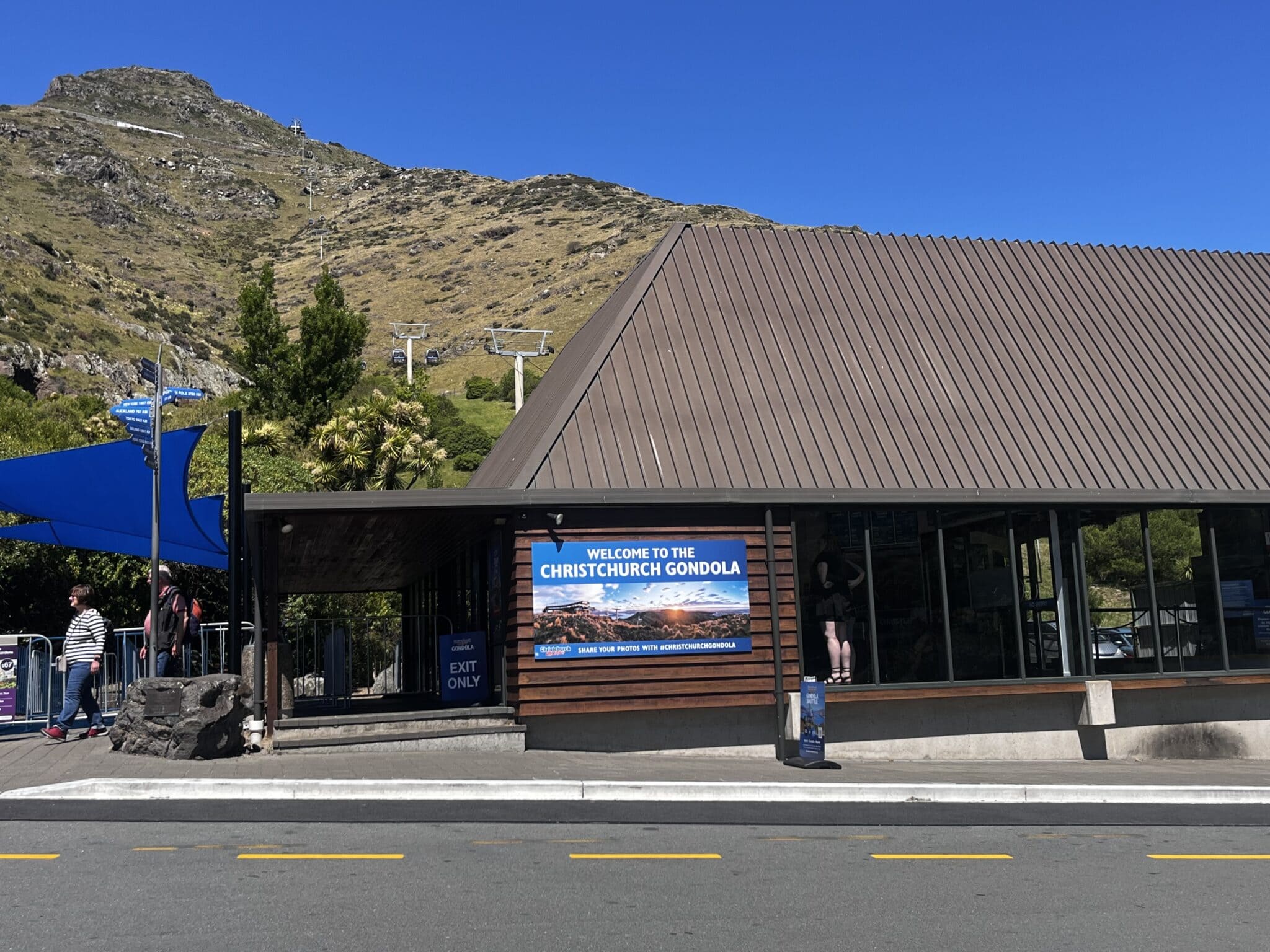
Christchurch
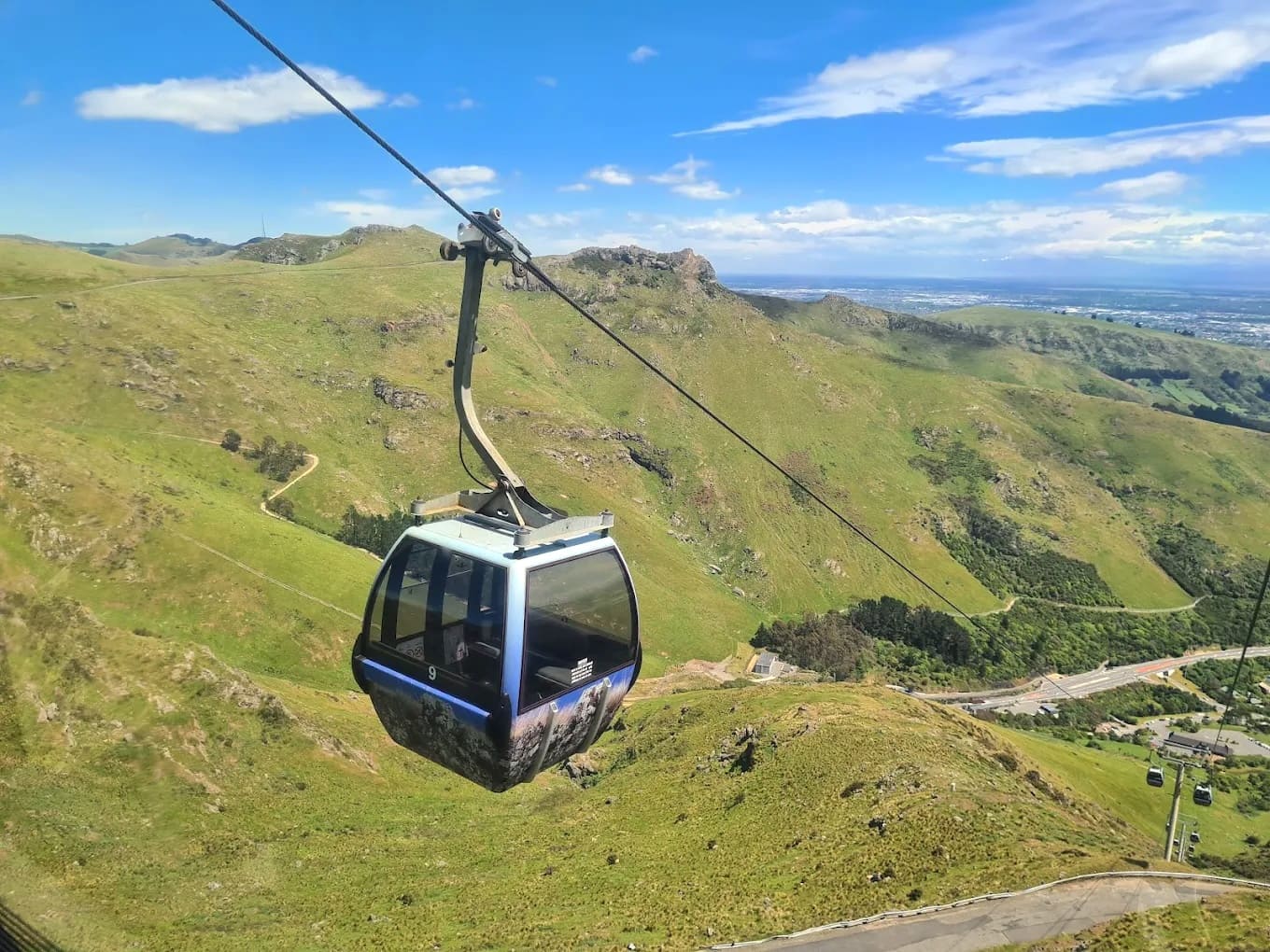
Gondola offers breathtaking panoramic
views of New Zealand’s South Island, stretching from the
Canterbury Plains to the Southern Alps, and across Lyttelton
Harbour to the vast Pacific Ocean. This scenic cable car
ride ascends the 852 meter horizontal ascent over the Port
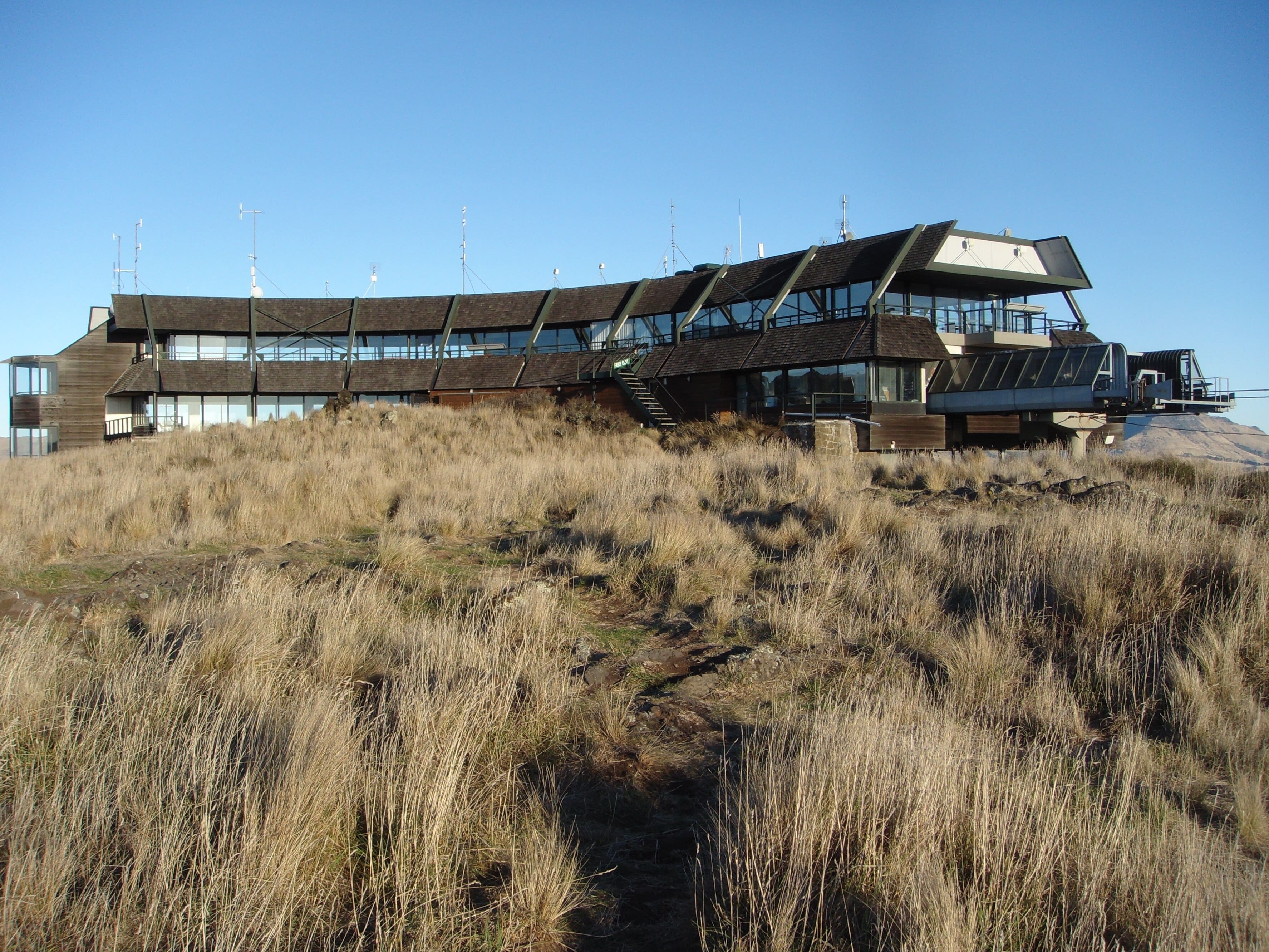
Hills, and it is a 10-minute journey to the summit. Once you
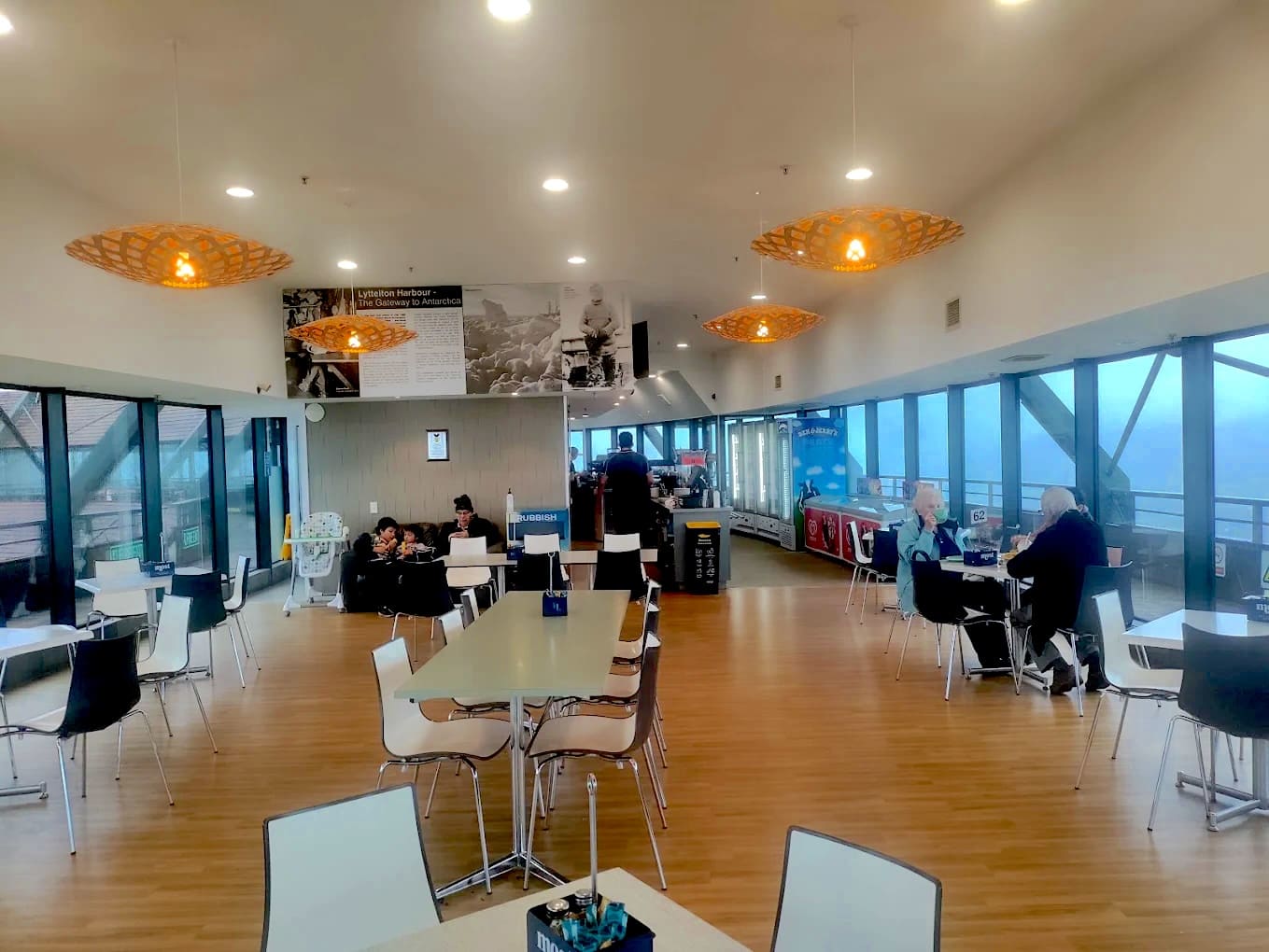
arrive you enter the Red Rock Cafe, which offers a panoramic
view of the area. Braving the winds, there is a wrap-around
terrace which provides a more immersive view of the
landscape. Just above the main exit to the terrace is a
panoramic photo showing all the points of interest looking
south that can be seen from the front of the observation
deck.
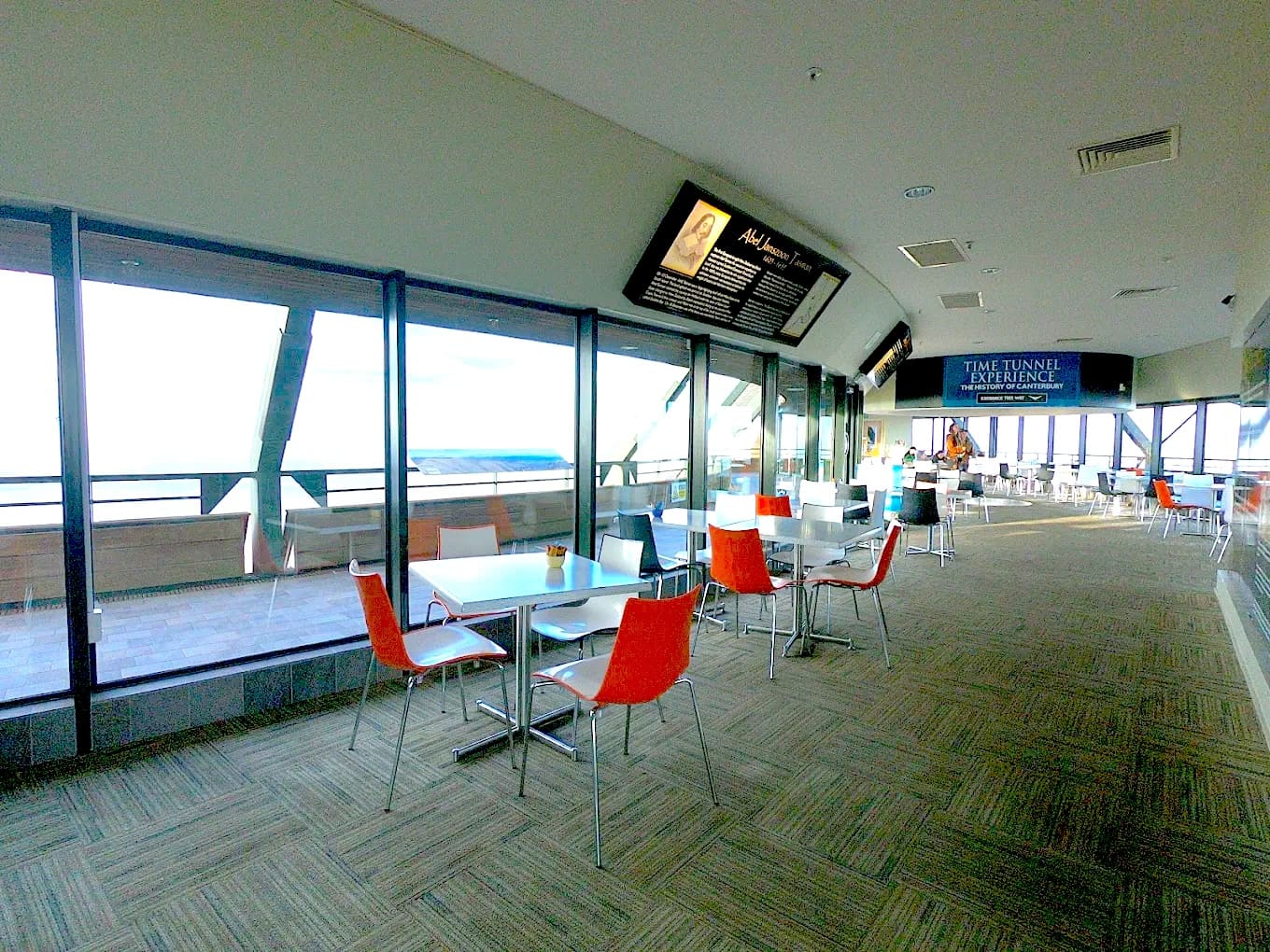
The windows of the cafe allow a 270-degree view of the area from
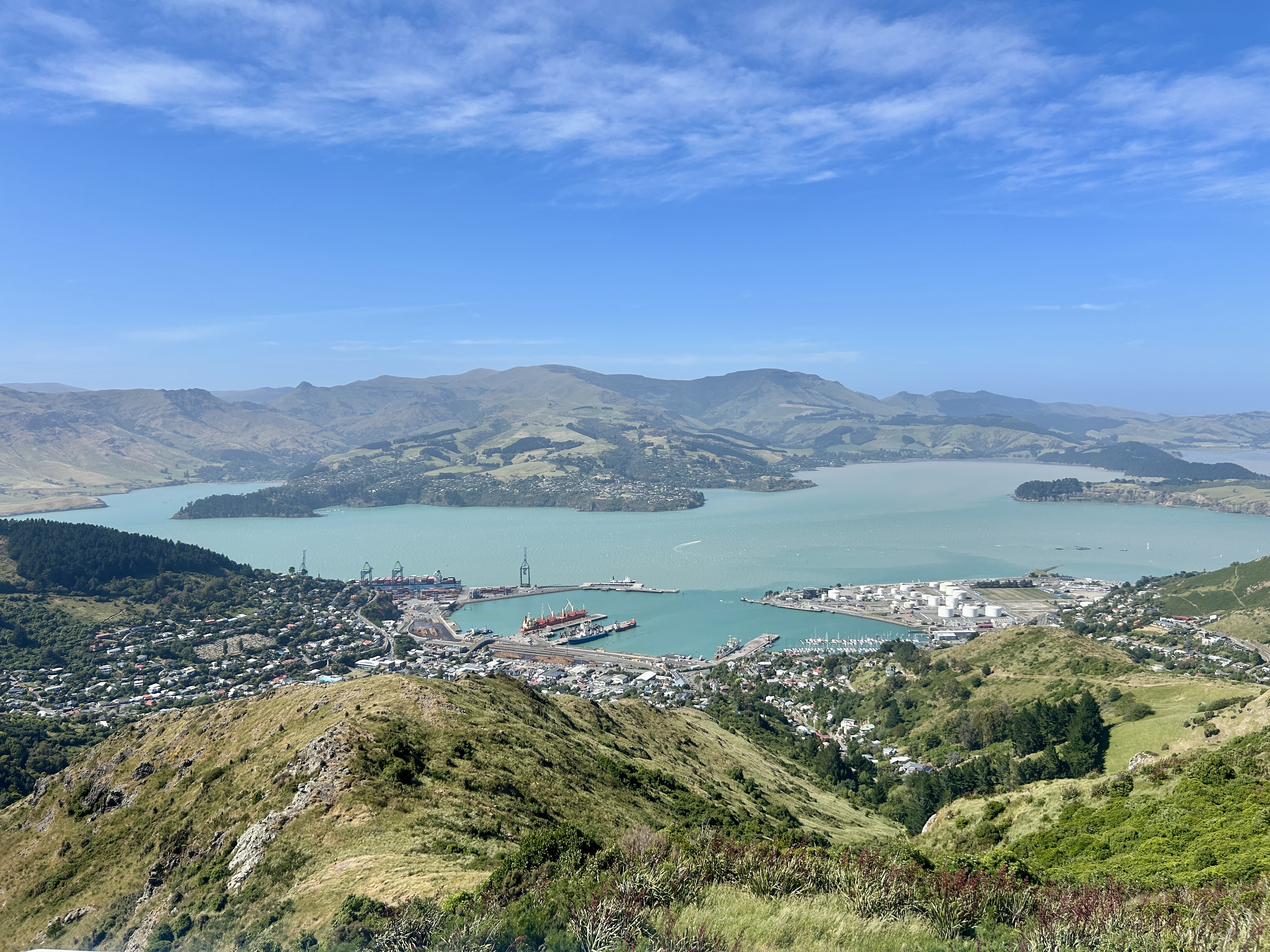
Mount Cavendish. To the left of the main exit is a
panorama of that side of the deck, which shows the view to
the southeast, including Lyttelton Harbor:
As a signboard in the cafe explains, this was the starting
point for explorers such as Scott and Amudsen in their race
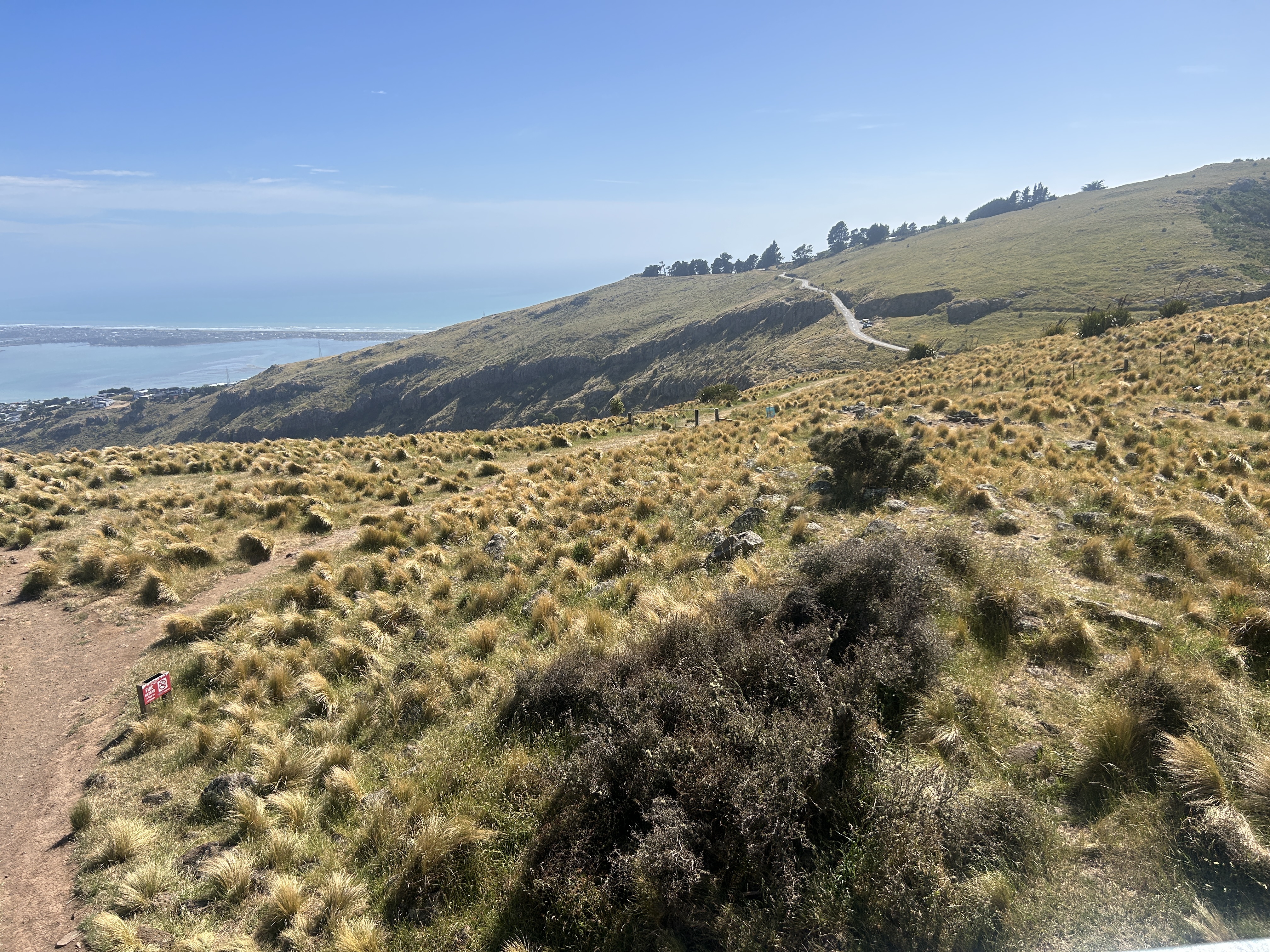
to the South Pole. The view to the west reveals the hiking
trails that criss-cross Mount Cavendish. The southwestern
side of the deck looks out over the Cavendish Bluff, where
numerous trails criss-cross the summit. They include:
the 4.8 kilometer Cavendish Bluffs Loop
the 7.2 kilometer Mount Pleasant Loop
the 2.9 kiloment Crater Rim Walway & Summit Road Loop
the Bridle Path connecting Lyttelton to Christ Church.
Below
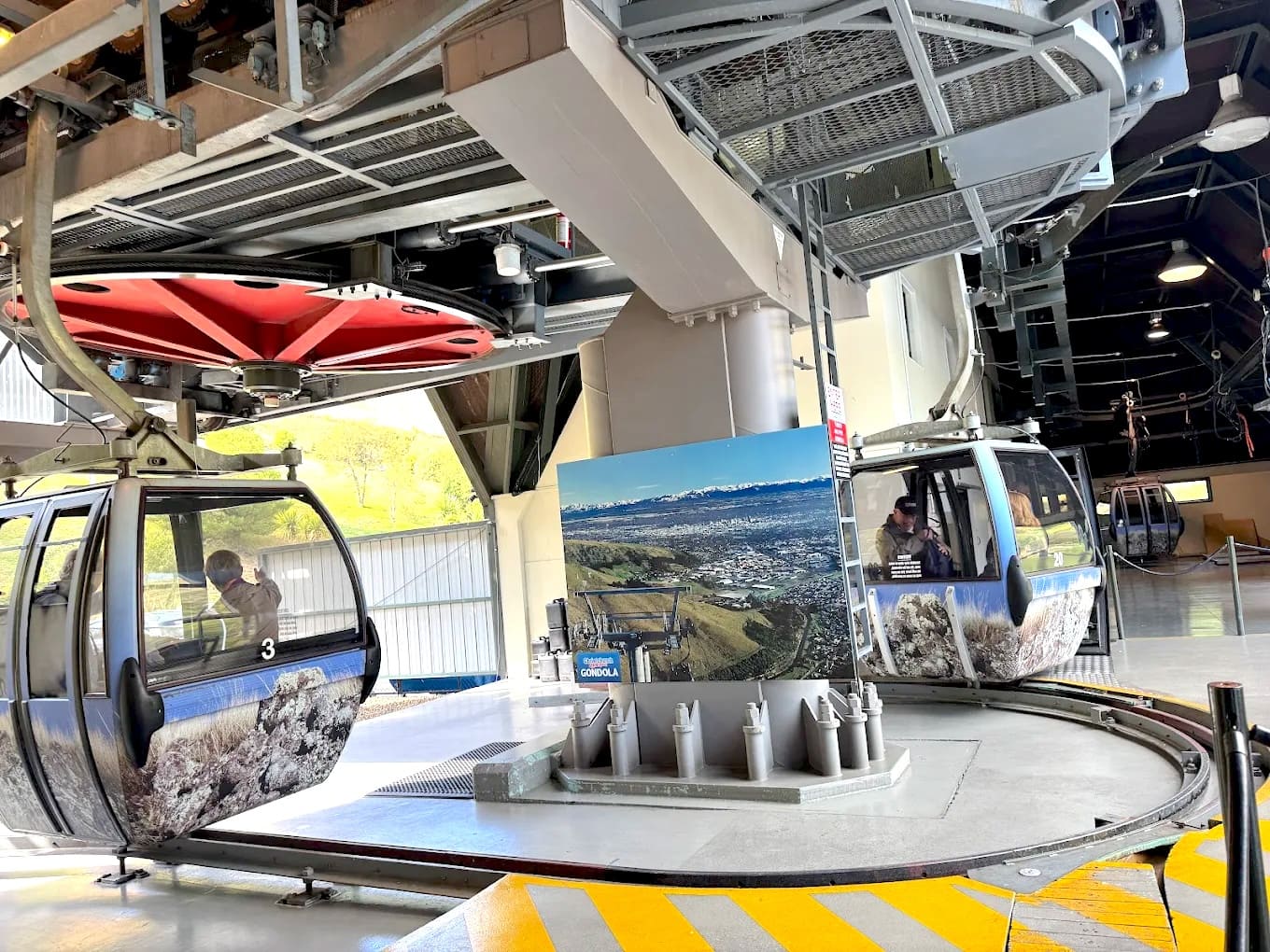
is a photo gallery offering a sequence of photos that
capture the experience of the Christchurch Gondola. Below
that is a video showing the ride up and back down, as well
as the panoramic view from Mount Cavendish.
The
Christchurch Gondola (click
on photos to enlarge)
Gondola Base
Station
Boarding the
Gondola
Gondola Car
Gondola
Summit Station
Red
Rock Cafe
Summit
Observation Deck
Lyttelton
Harbour Signboard
View of
Lyttelton Harbour
Coavendish
Bluff
Christchurch Gondola
Experience.
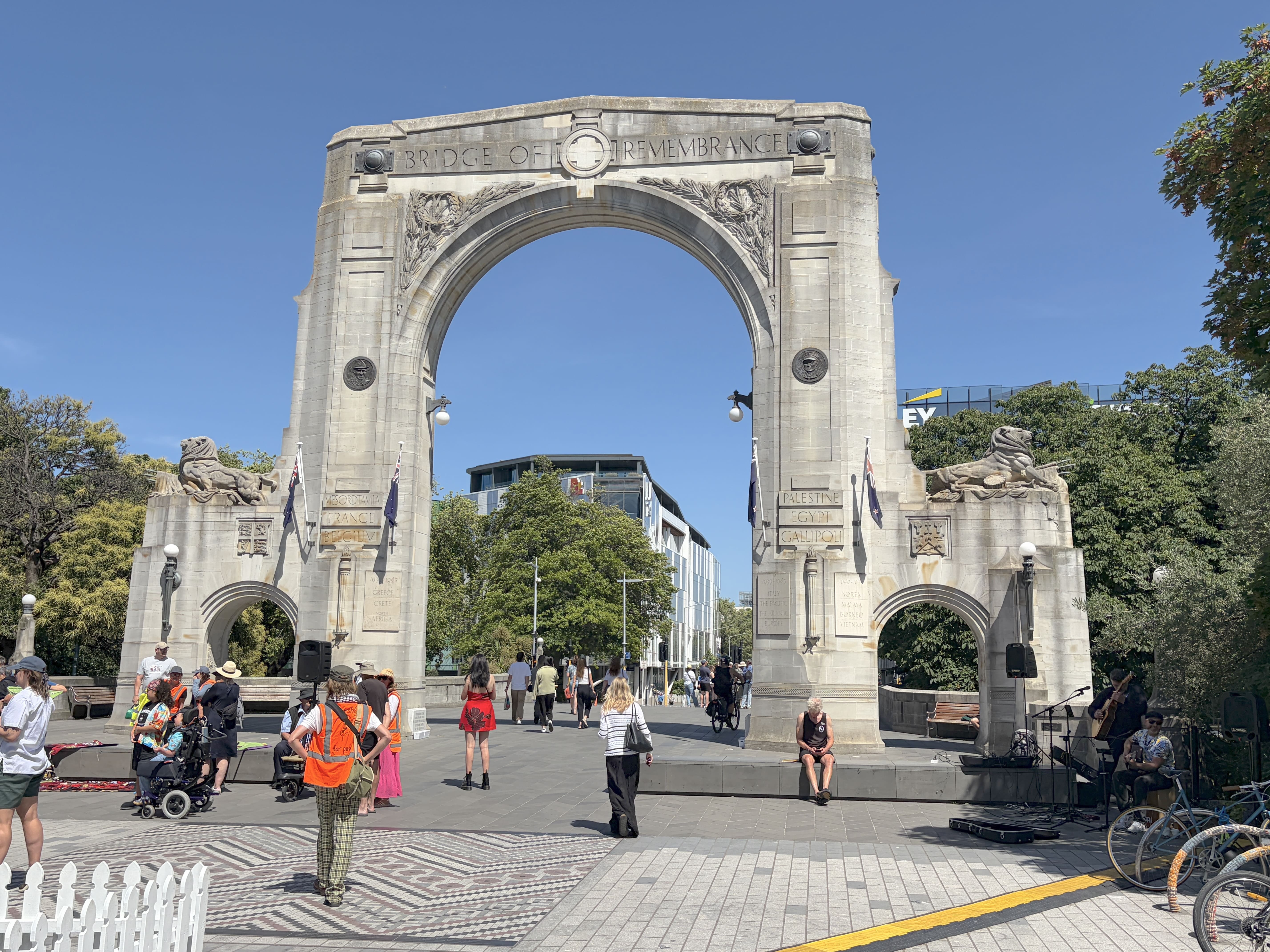
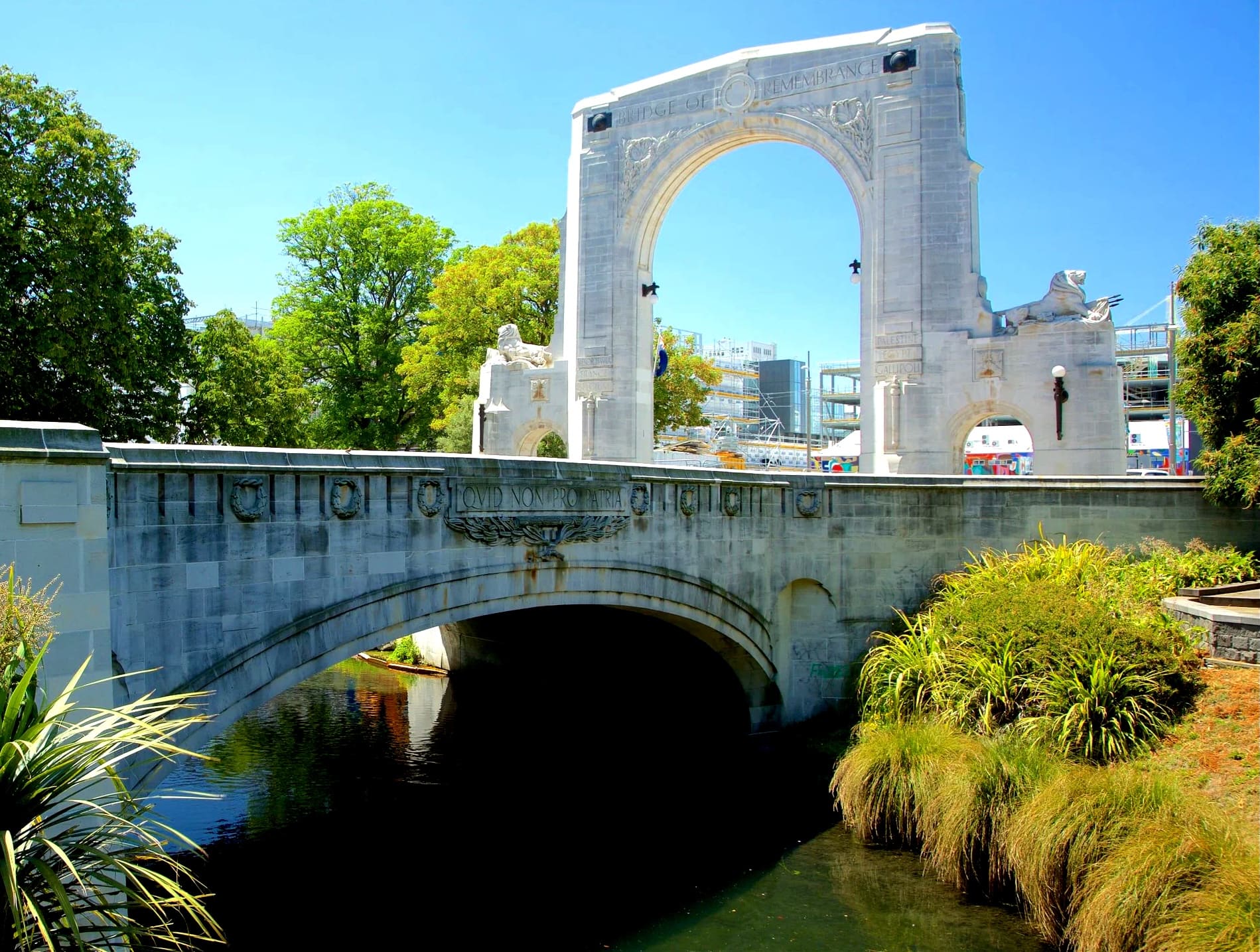
Riverside Market Our next stop on
the tram was at the Remembrance Monument. A triumphal arch
originally dedicated dedicated to World War I soldiers, it was
later expanded to honor all those who served in conflicts in
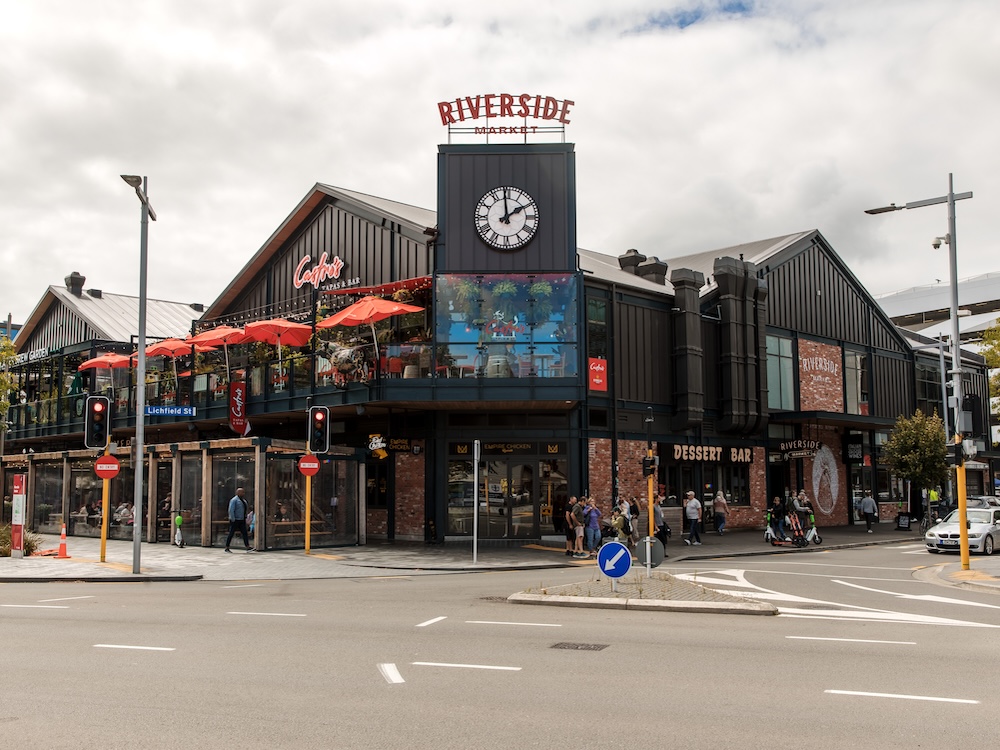
Borneo, Malaya, Korea and Vietnam. Next to the arch is the
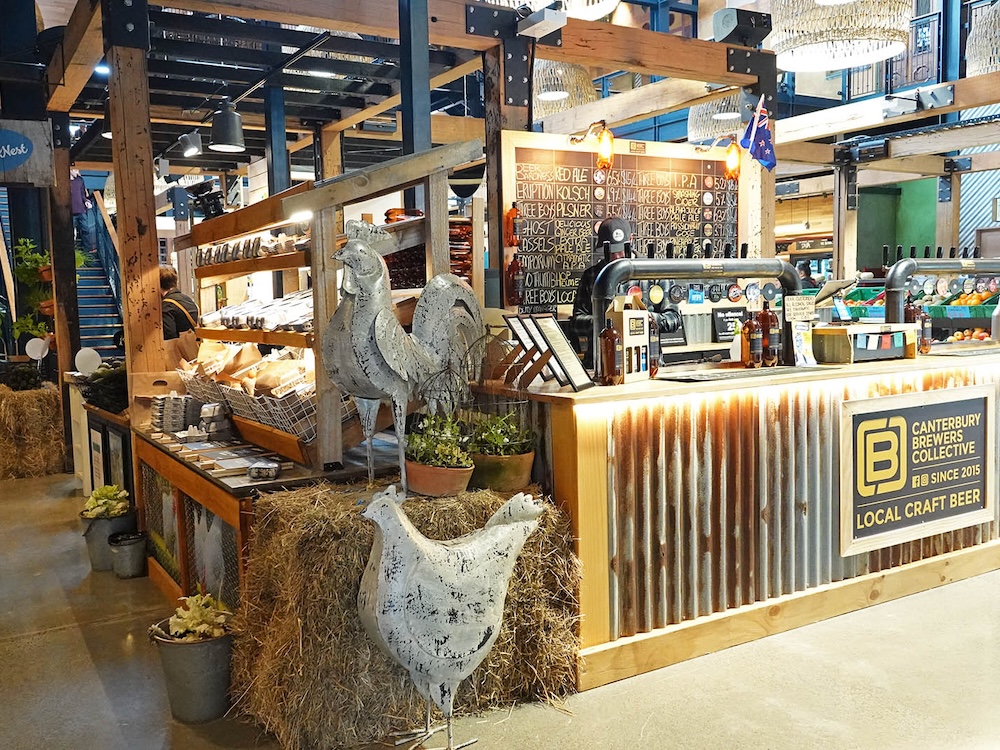
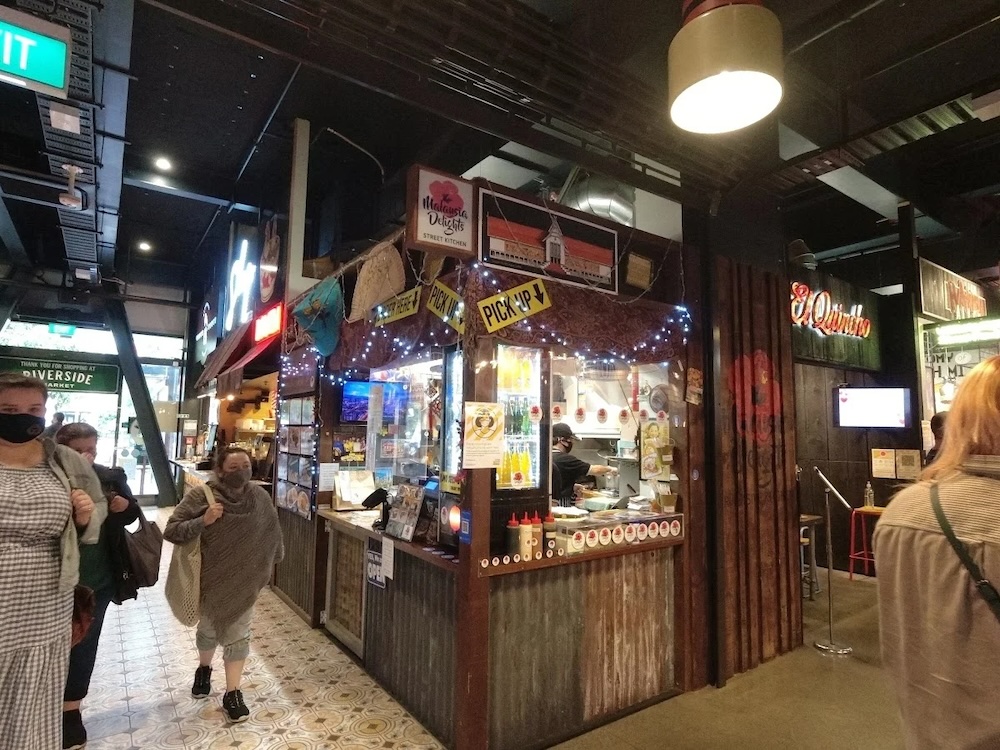
Riverside Market. Tucked in the heart of Christchurch’s city
center, Riverside Market is a vibrant, bustling food haven that
perfectly blends local charm with international flavors. This
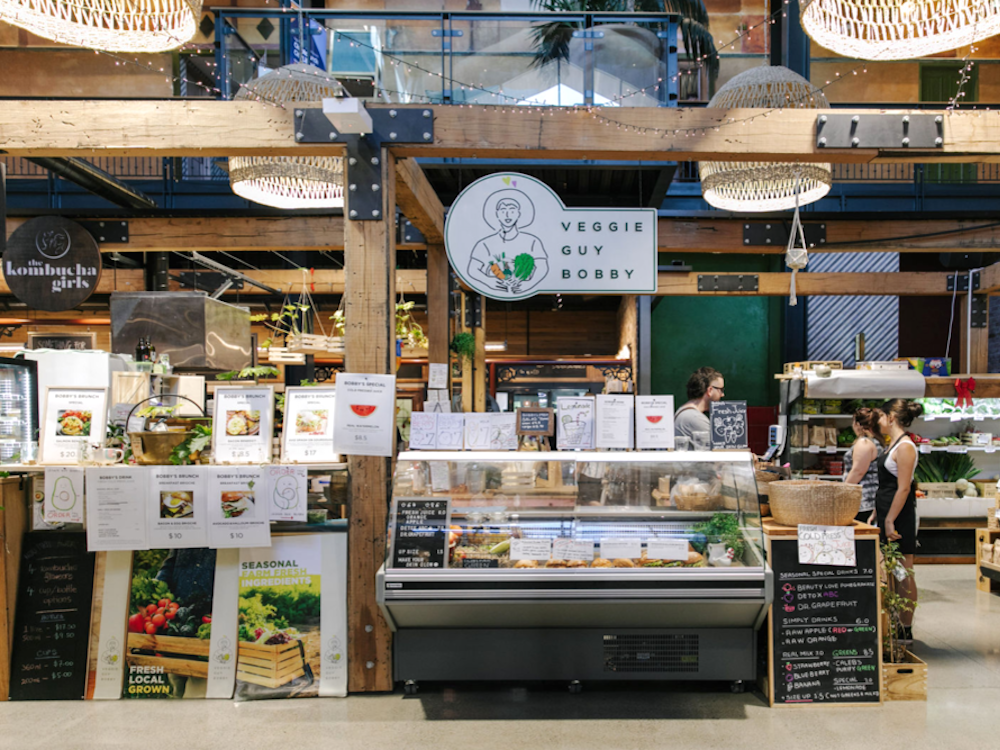
indoor market, with its rustic wooden beams and industrial-chic
design, hums with energy as locals and visitors alike meander
through its lively stalls. Here, the scent of freshly baked pastries
mingles with the smoky aroma of sizzling street food. You’ll find
artisan cheeses, organic produce, boutique coffee roasters, and gourmet chocolates, all
sourced from local producers. Seafood lovers can indulge in the
freshest catch, while those craving international flavors can savor
anything from authentic sushi to spicy curries. Beyond food,
Riverside Market is a community hub, where live music, friendly
vendors, and cozy seating areas invite you to linger. Whether
you're hunting for the perfect picnic supplies, grabbing a craft
beer from a local brewery, or simply soaking up the lively
atmosphere, this market is an unmissable Christchurch experience.
Below are photos of a few of the many shops, as well as a video
walkthrough of the Riverside Market.
Christchurch
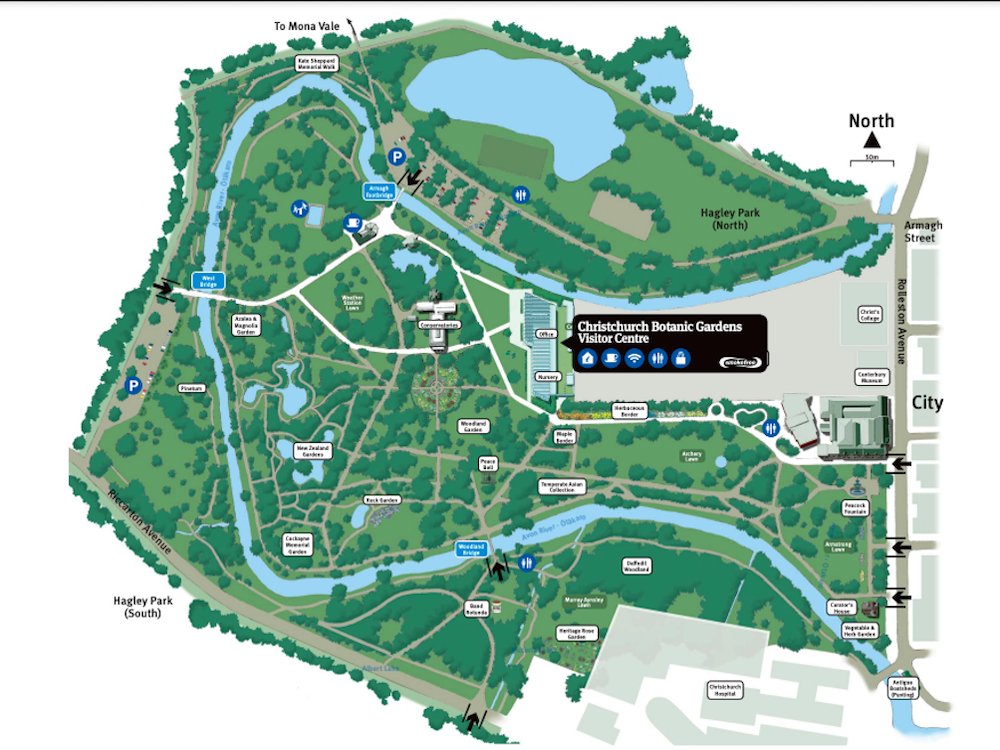
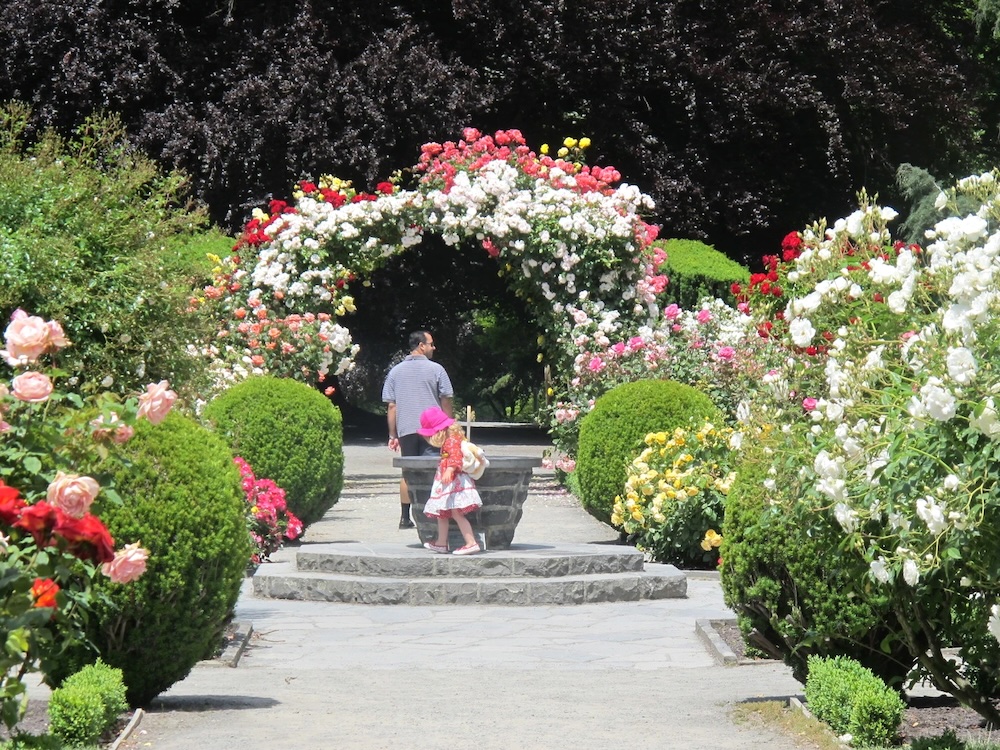
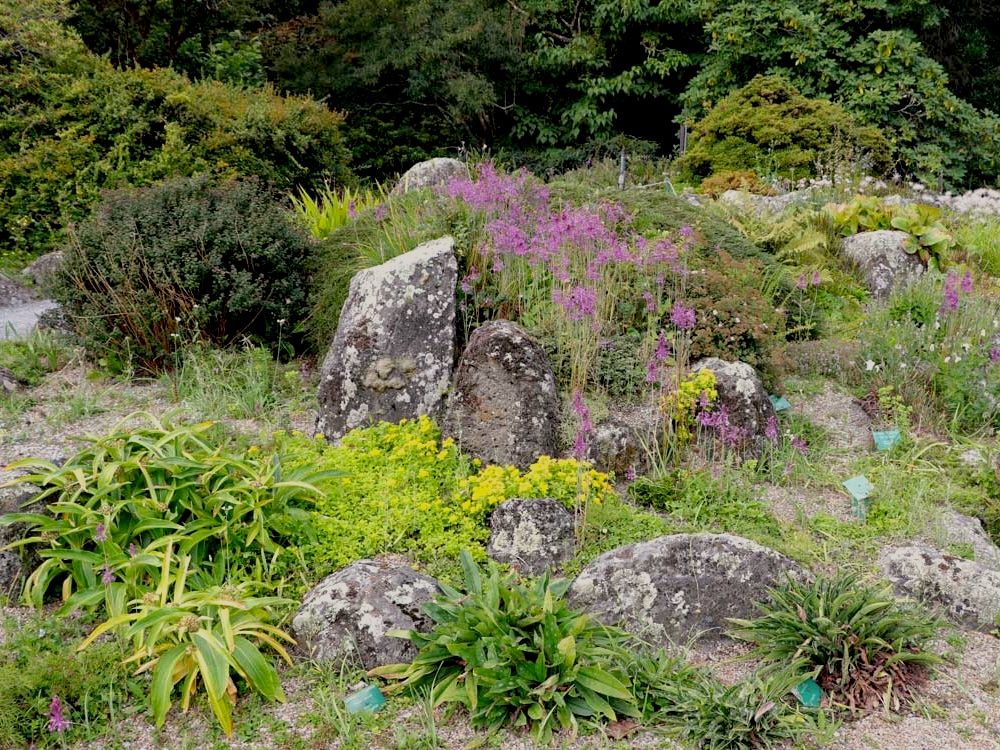
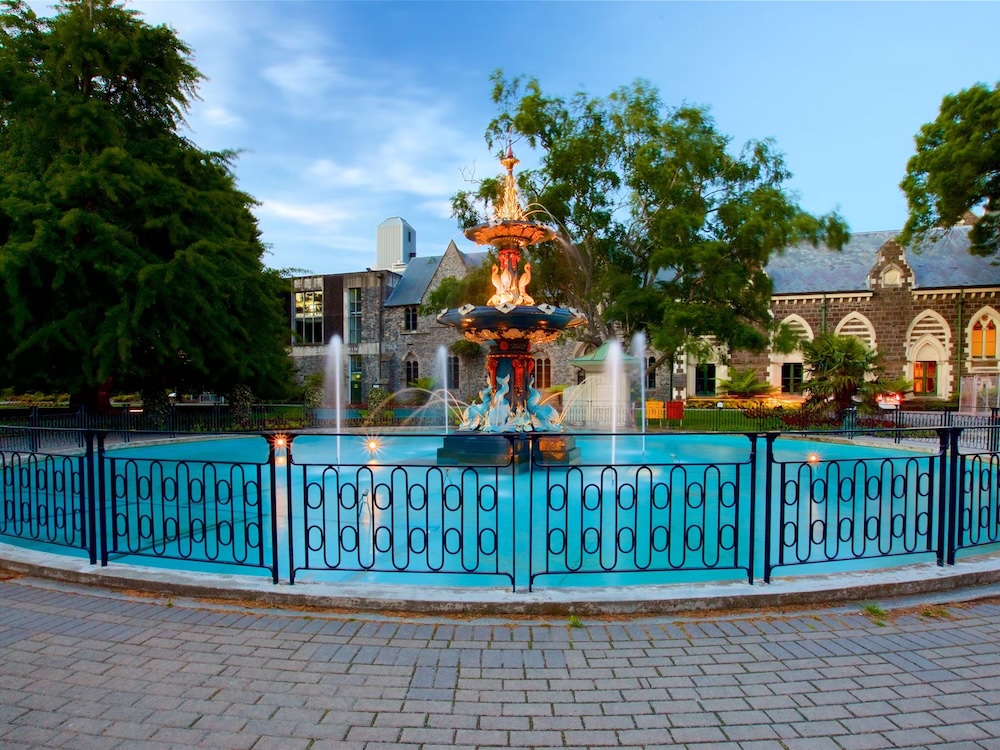
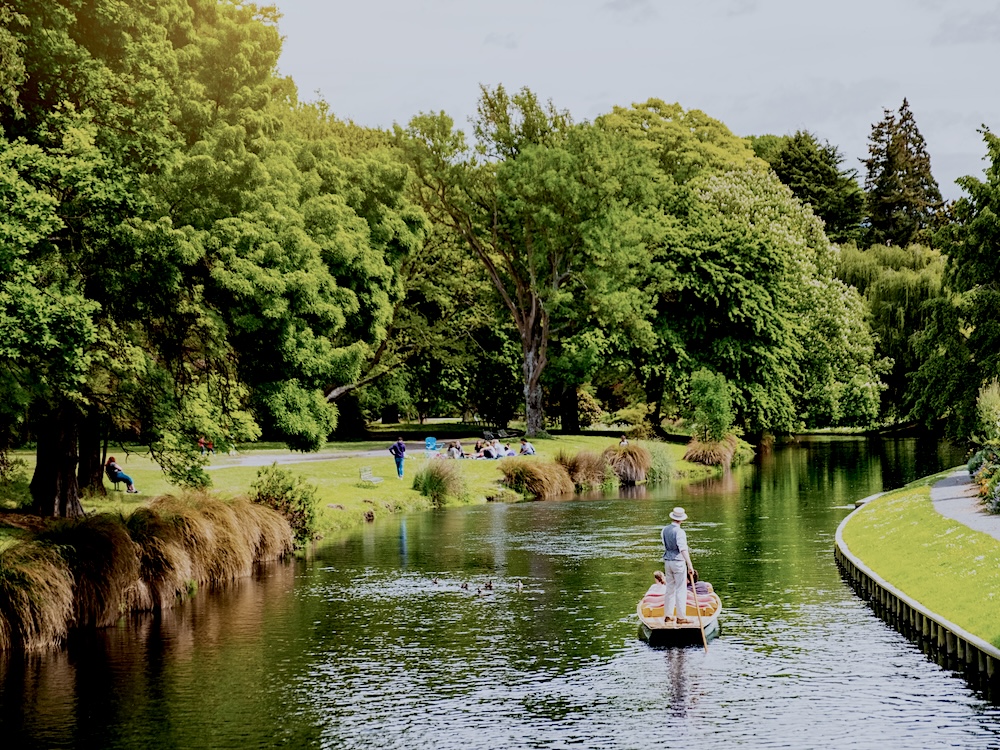
Botanic Gardens form a lush, tranquil oasis in the
heart of Christchurch, renowned for its diverse collection of
native and exotic plants. Spanning over 21 hectares, the gardens
feature meticulously landscaped areas, including seasonal flower
displays, expansive lawns, and themed gardens such as the Rose
Garden, the Rock Garden, and the Water Garden. Towering heritage
trees, some over 150 years old, provide shade along winding
pathways that lead visitors past the picturesque Avon River,
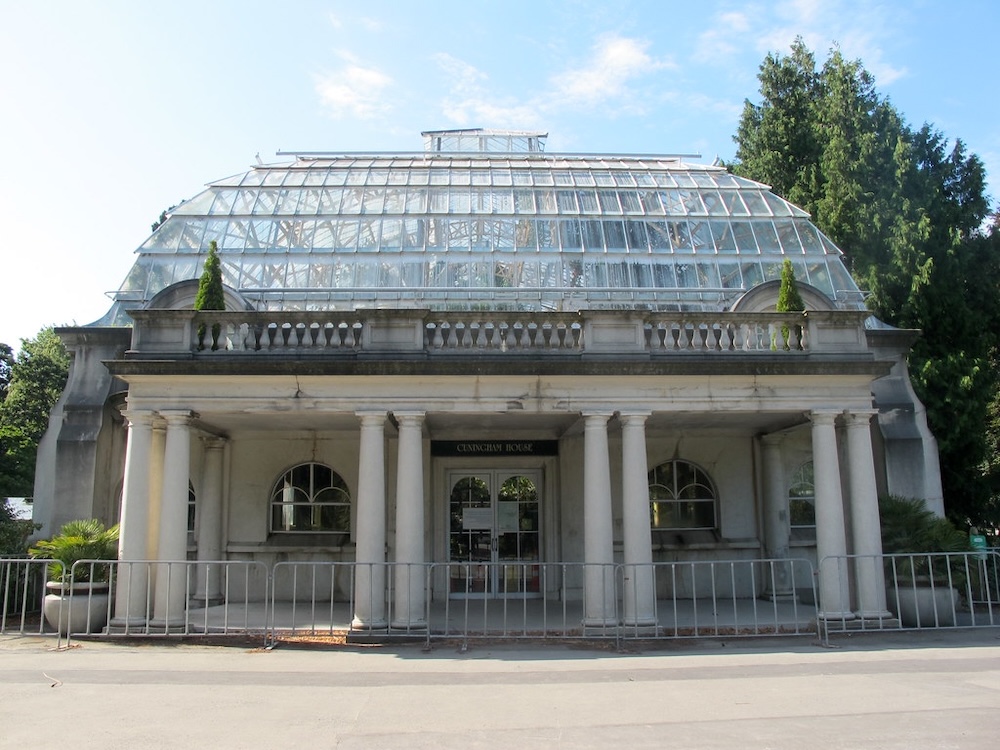
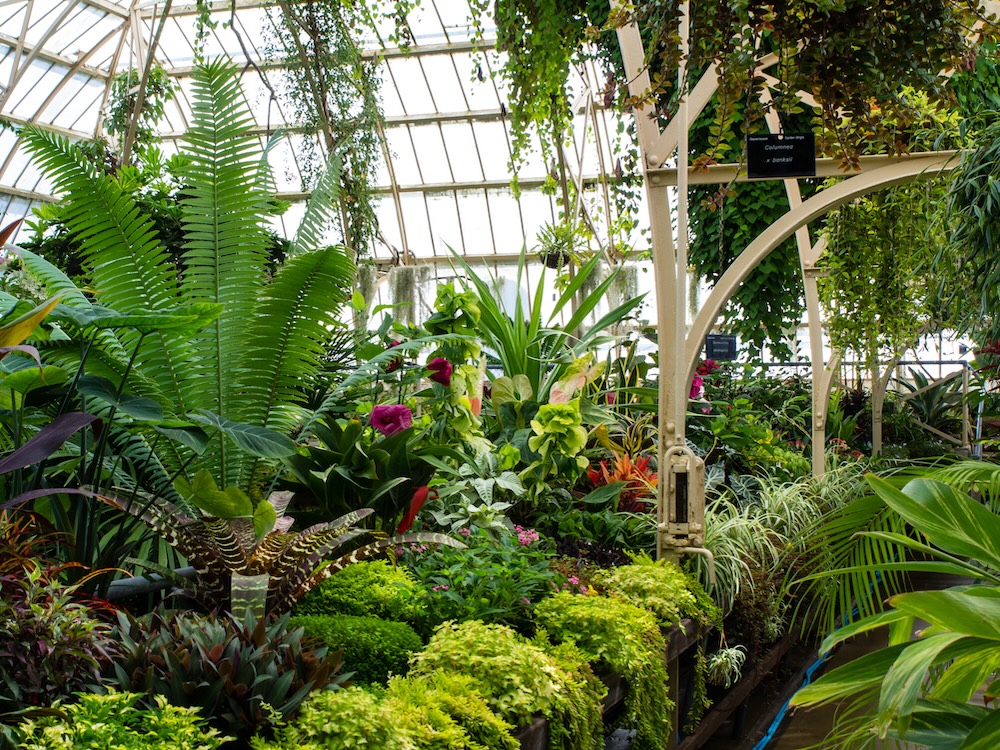
which gently meanders through the gardens. The Conservatory
Complex houses a variety of tropical and
arid plant species, while the New Zealand Garden showcases the
country’s unique flora. Birdsong fills the air as native
wildlife, including ducks and fantails, thrive in this serene
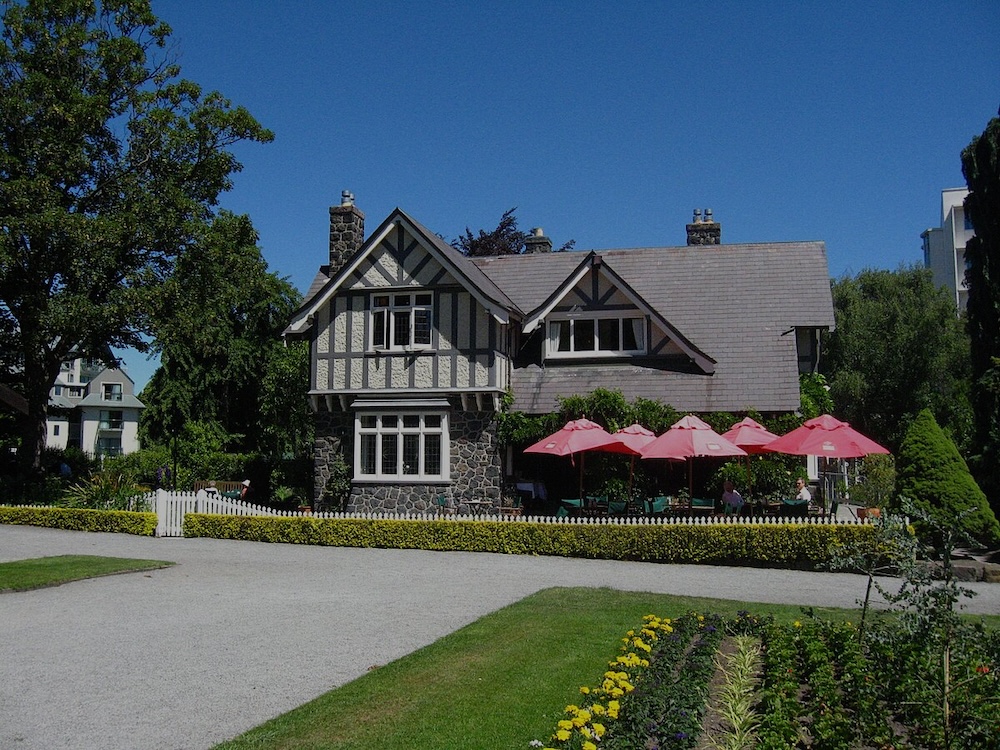
setting, dotted with works of art. The Curator’s House, a
historic building with a charming café, adds to the gardens'
appeal.making it a beloved destination for nature lovers,
families, and visitors seeking a peaceful retreat in the city.
If you are an avid horticulturist the Travel With Zora
YouTube channel videotaped the entire (23 minute) guided
tour of the flora and trees in the gardens. Here
is the link to that tour (opens in a separate window, so
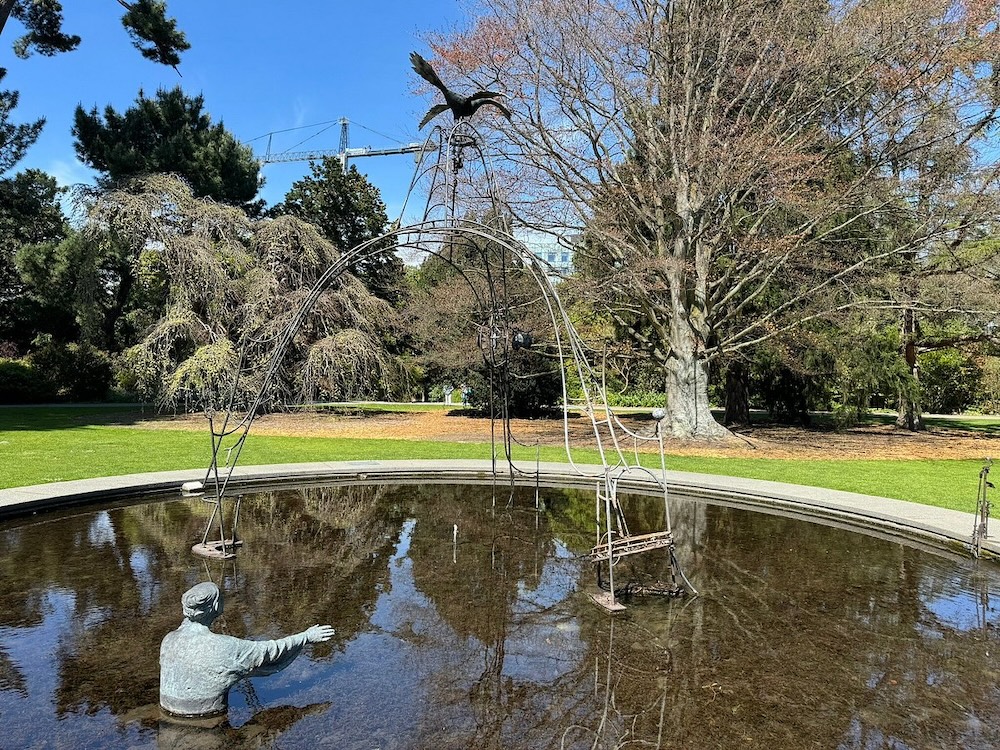
we don't lose you!). Below are some scenes from the gardens, as well as a
video from NZ Pocket Guide.
Scenes
from Christchurch Botanic Gardens
Rose Garden
Rock Garden
Peacock Fountain
(Water Garden)
Heritage Trees
Along the Avon
Cunningham
Conservatory
Conservatory
Interior
Curator's
House/Cafe
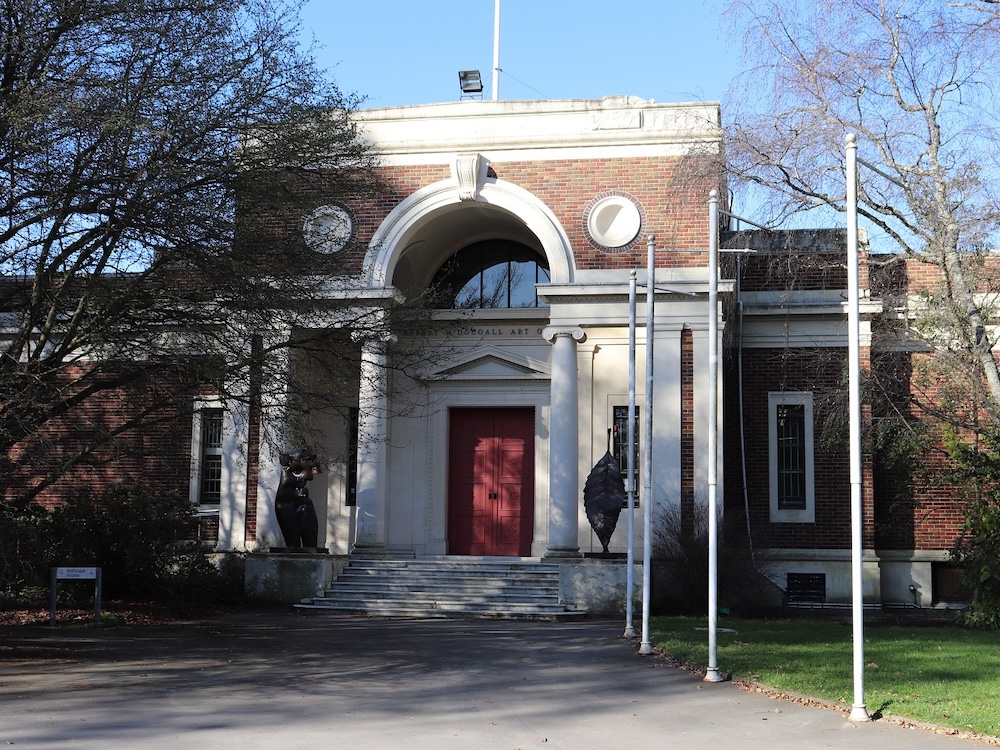
McDougall Art
Gallery
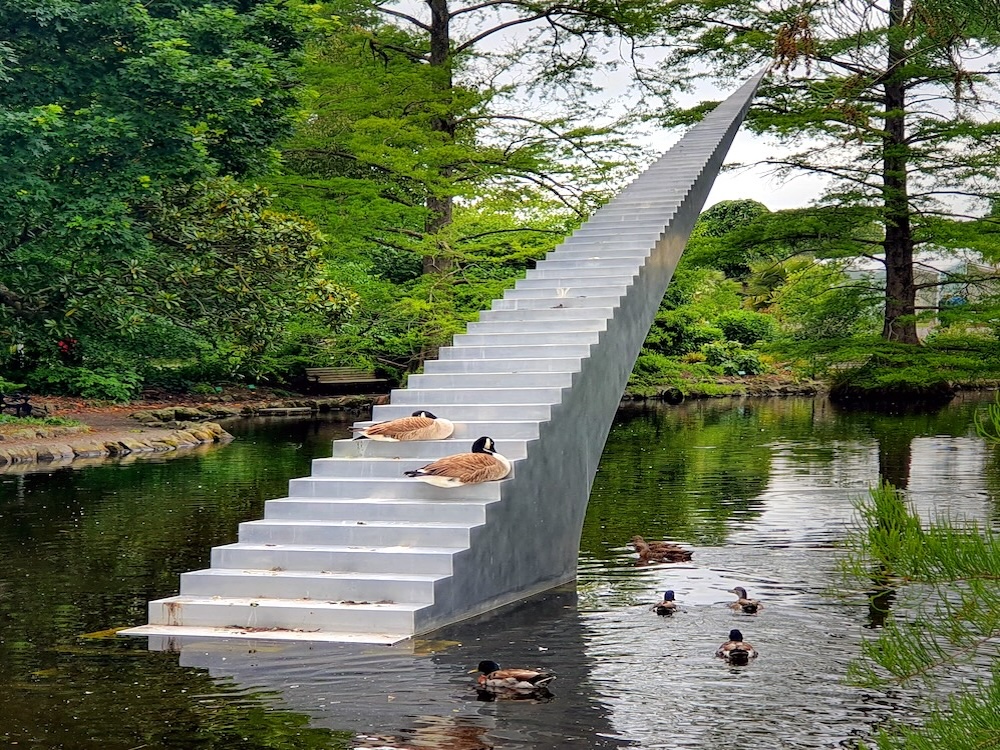
Diminish and
Ascend
(David McCracken)
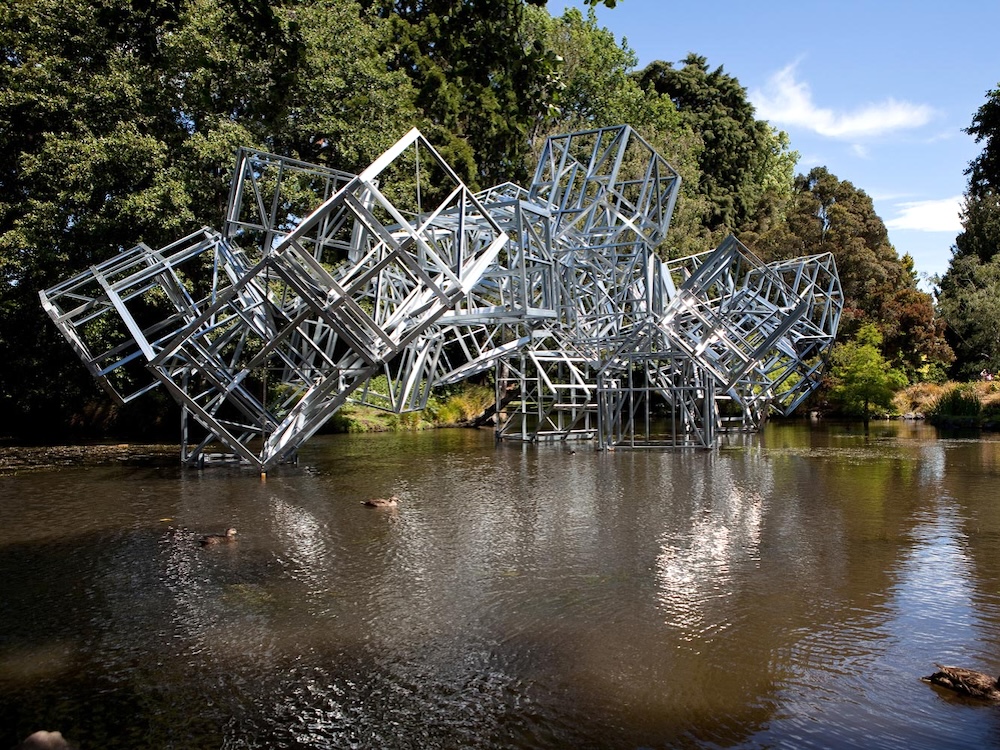
Muegano
(Hector Zamora)
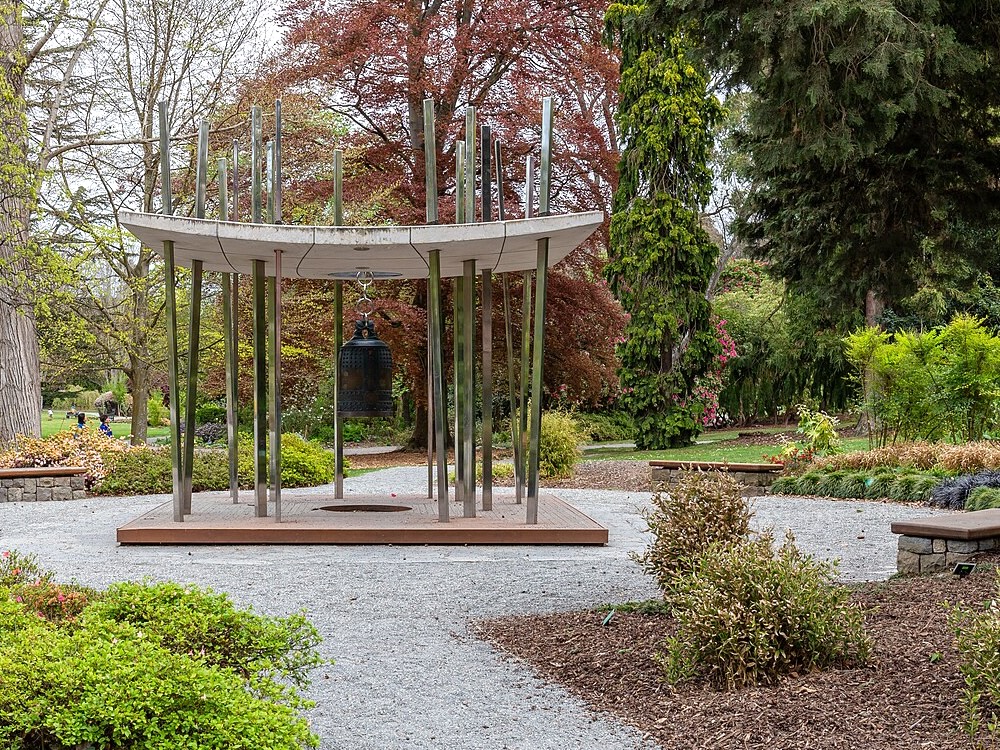
World Peace Bell
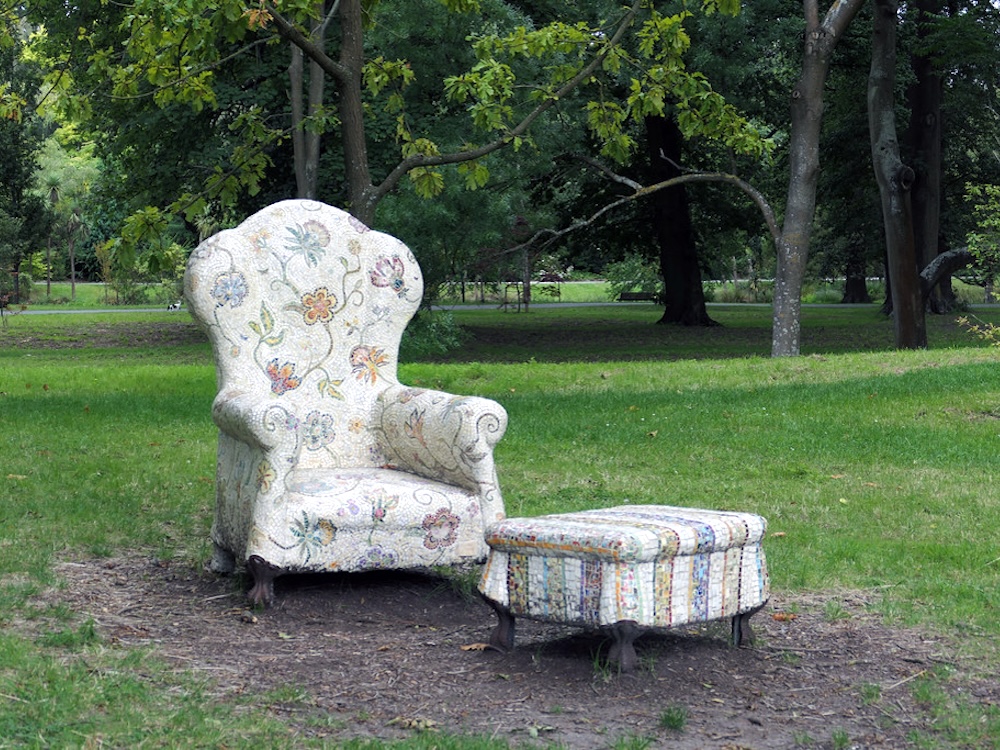
Flora and Otto (Made from China broken in 2011
Earthquake)
NZ Pocket
Guide's Tour of Christchurch Botanic Gardens
Canterbury
Museum The
Canterbury Museum, across the street from the Botanic
Gardens, was another site we had hoped to visit. Like
the cathedral, the museum sustained a great deal of
damage during the 2011 earthquake. And like the
cathedral, the museum has been moved temporarily, in
this case to a pop-up installation nearby Cathedral
Square. While we did not have time to fit this stop
in, we are including a video of the installation by June
Dang so that you may get a glimpse of its
exhibits.
Video of Canterbury Pop-Up Museum
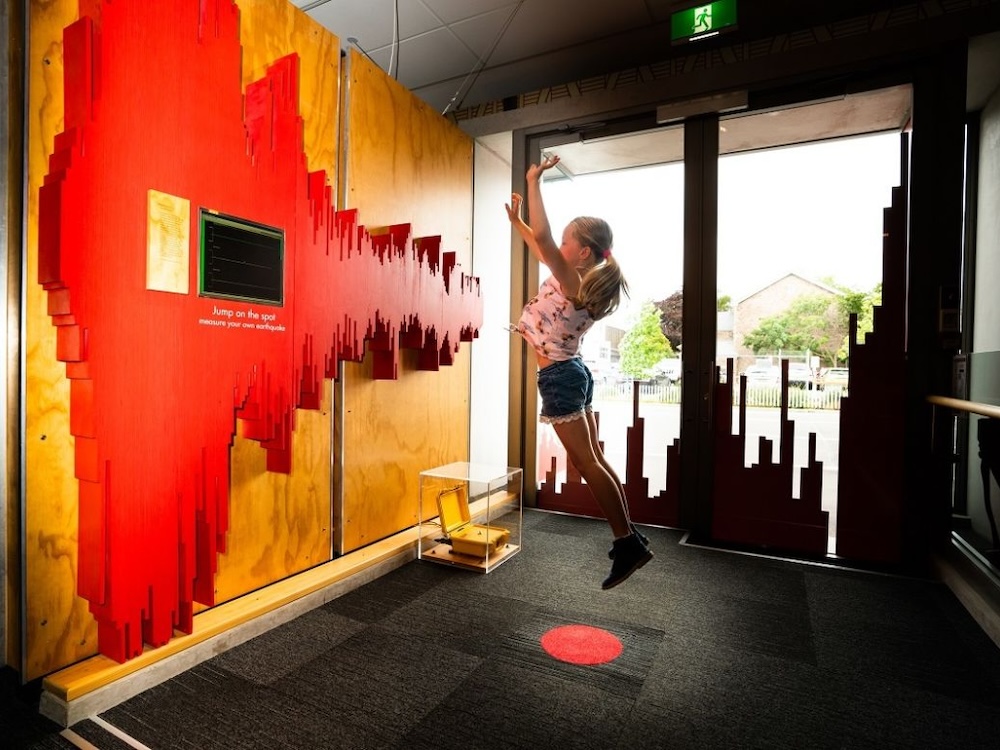
Quake City Museum
is a special
exhibition, developed and operated by Canterbury Museum,
that tells stories from the Canterbury earthquakes. It
first opened in Cashel Mall, Christchurch, in February
2013 and moved to 299 Durham Street North in September 2017.
The exhibition leads visitors through the
first shake of September 2010, the destruction and
rescue efforts of 22 February 2011, through to the clean-up
and rebuild. It
includes displays and interactives suitable for all ages,
allowing visitors to learn about the science behind the
quakes and understand the phenomenon of liquefaction. Below
is a video of the Quake Museum by its parent company, Canterbury
Museum, as well as a short photo gallery from the
Quake Museum.
Quake City by Canterbury Museum
Quake Museum (click on photo to enlarge)
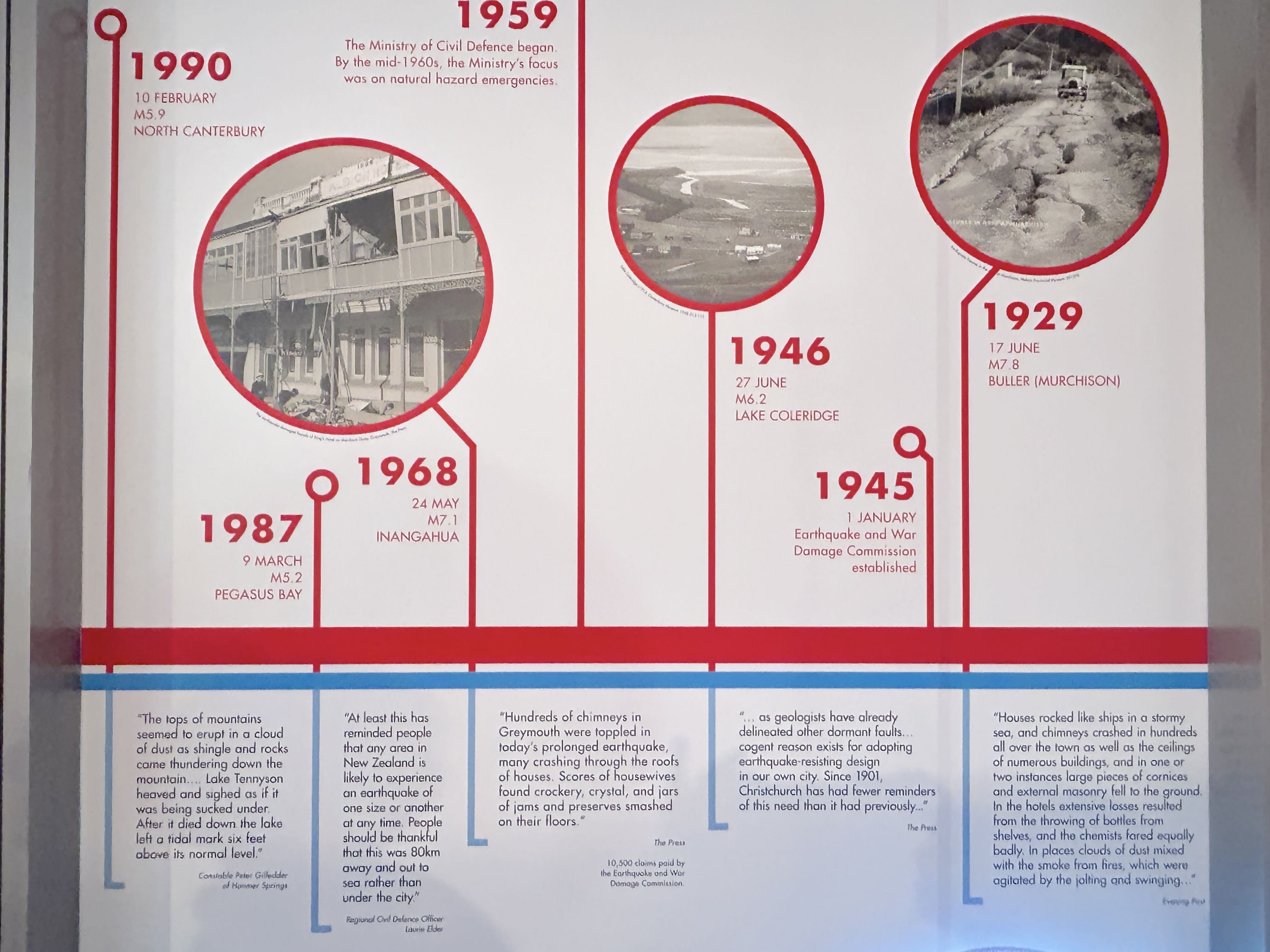
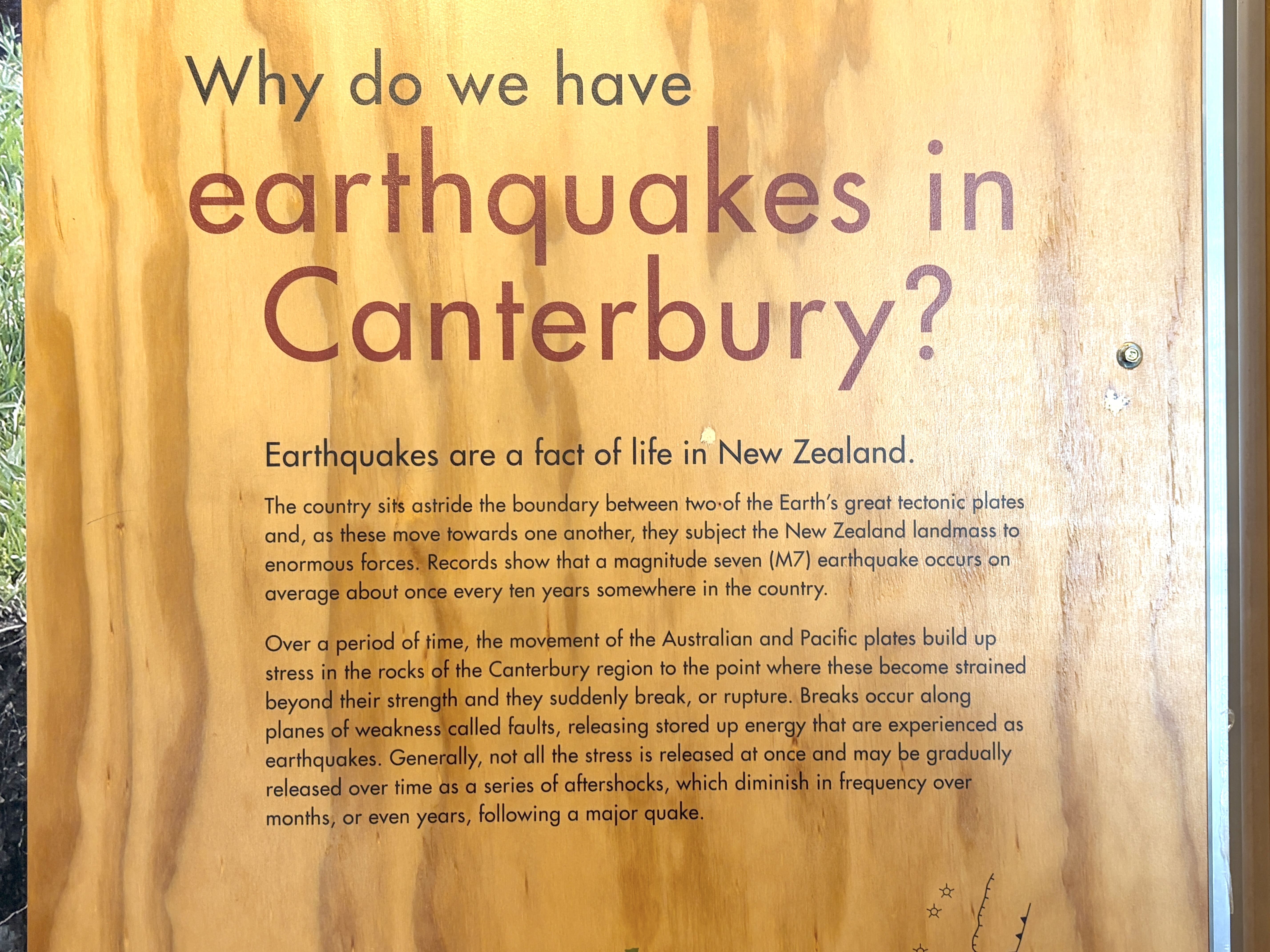
Quake
Timeline
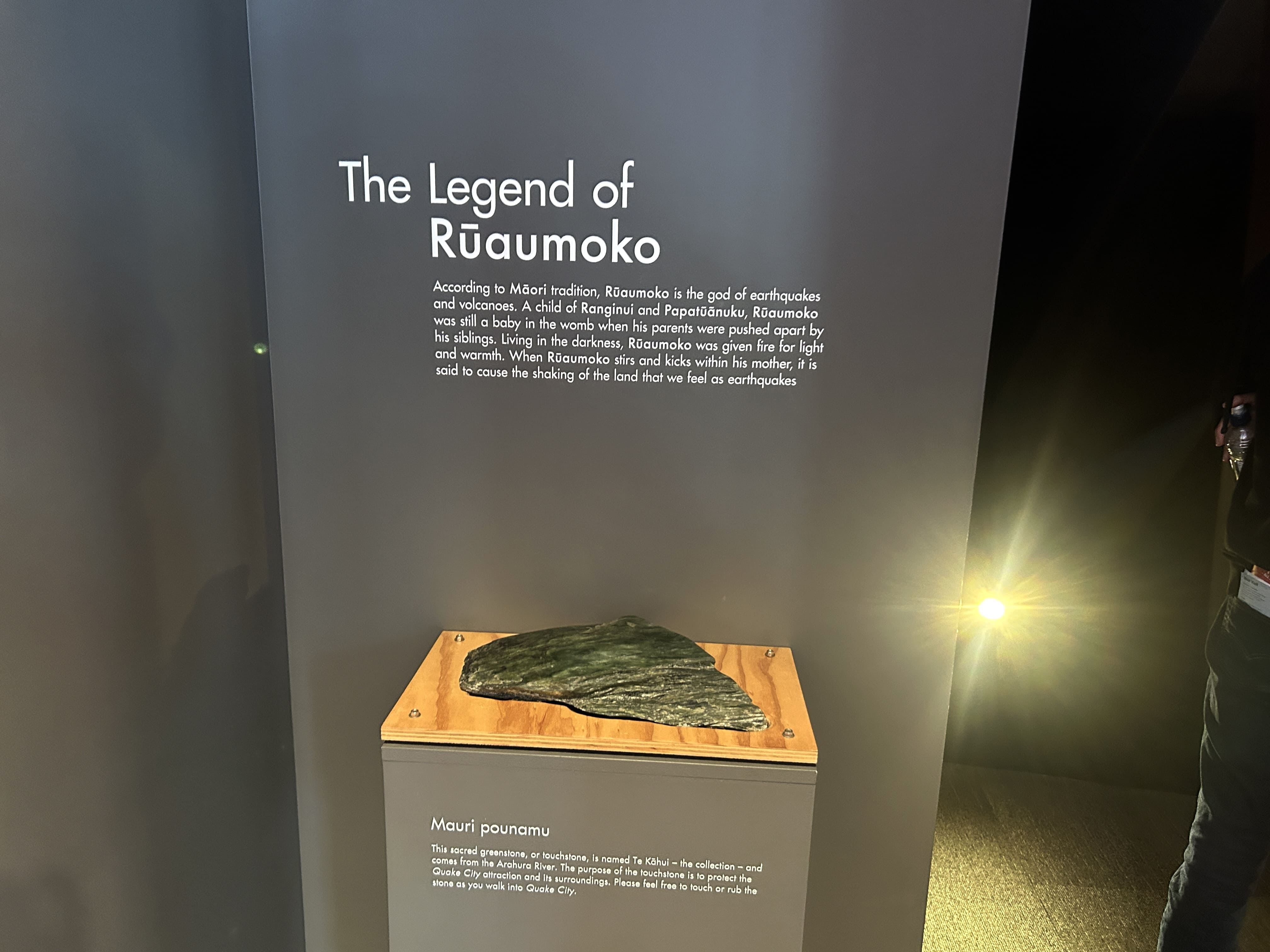
Rūaumoko,
God of Earthquakes
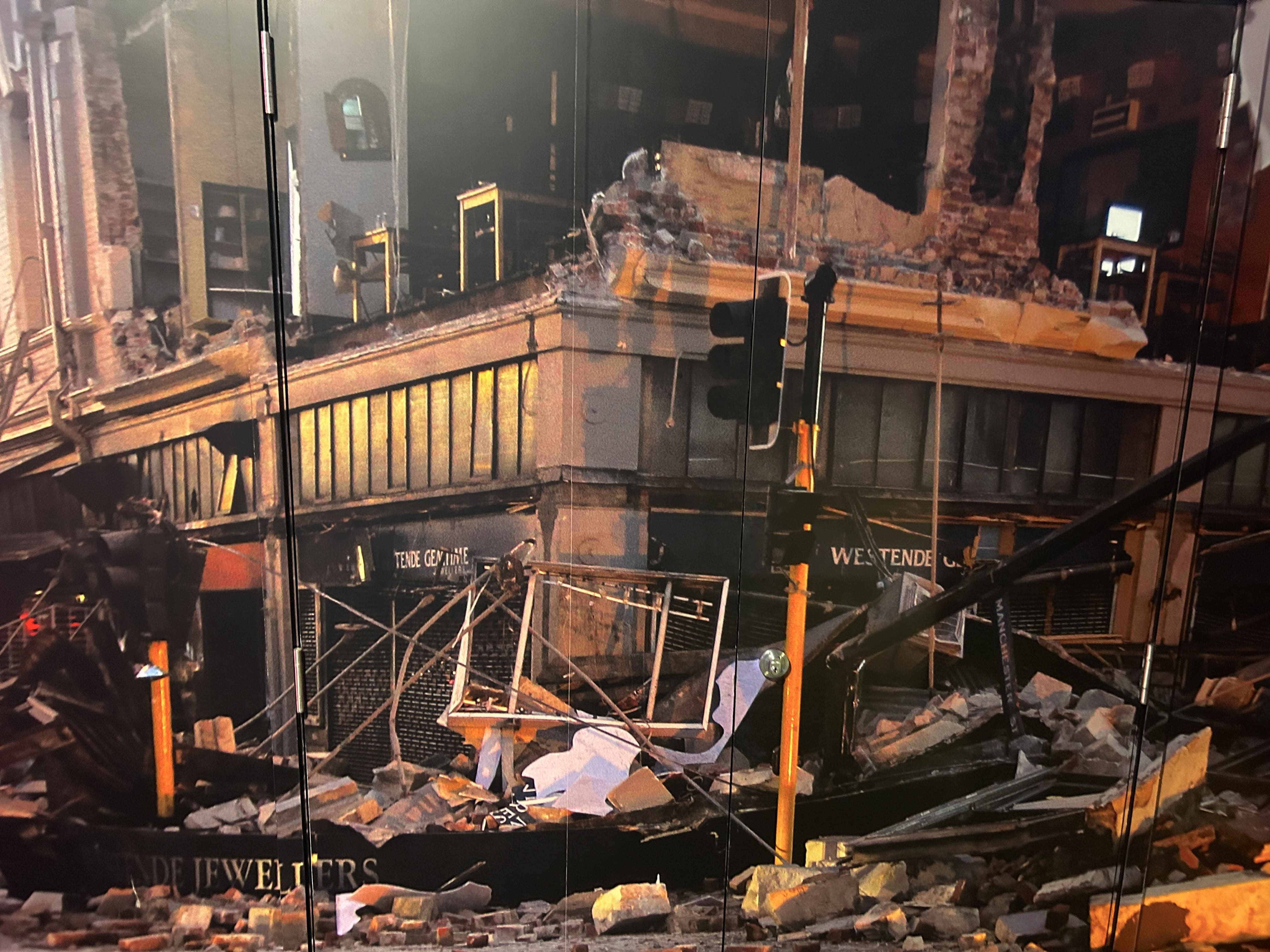
Quake
Scene
Emergency
Workers
What
Causes Earthquakes?
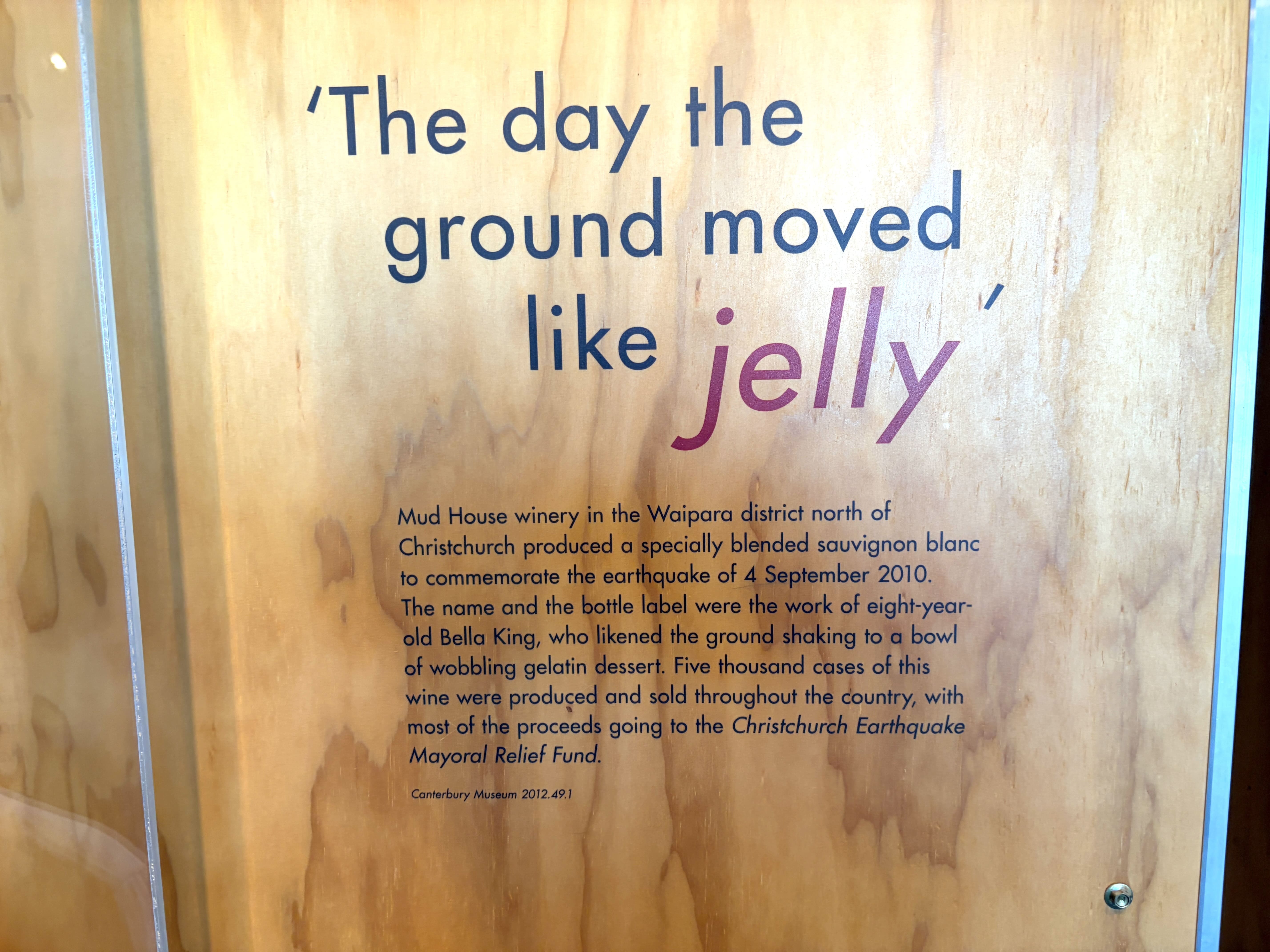
The
Ground Moved Like Jelly
New Regent
Street,
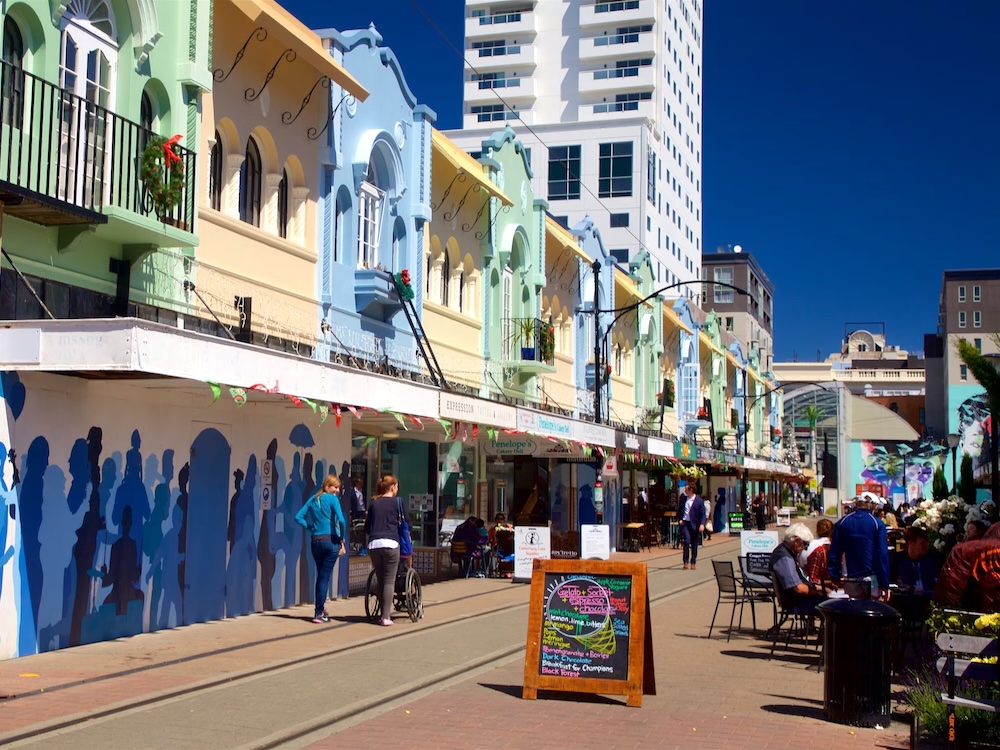
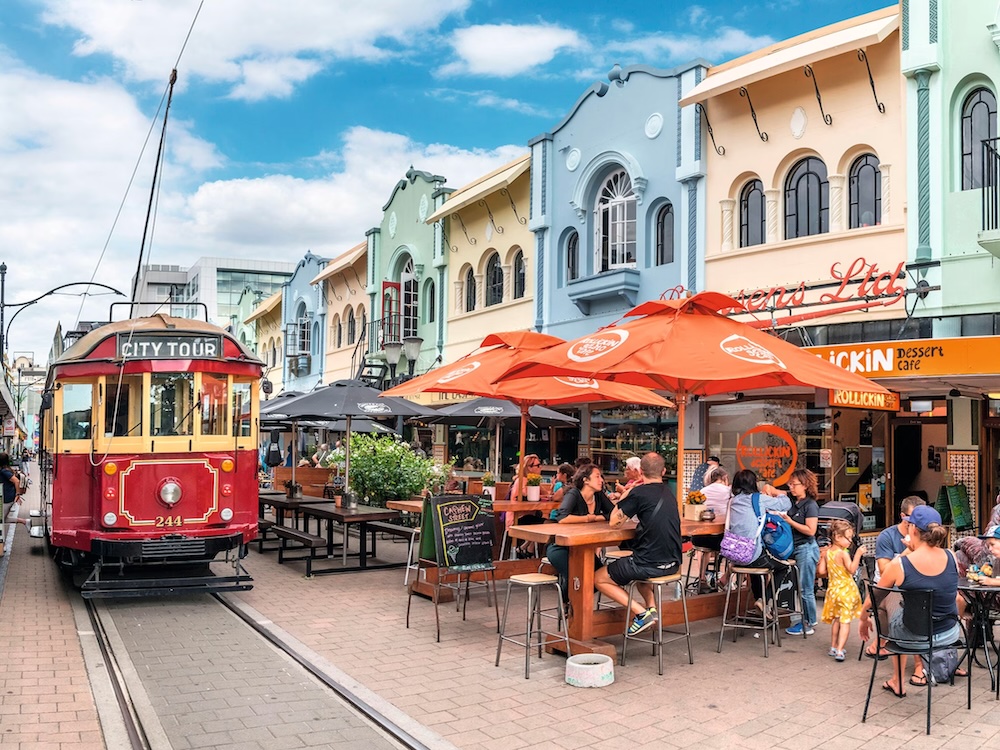
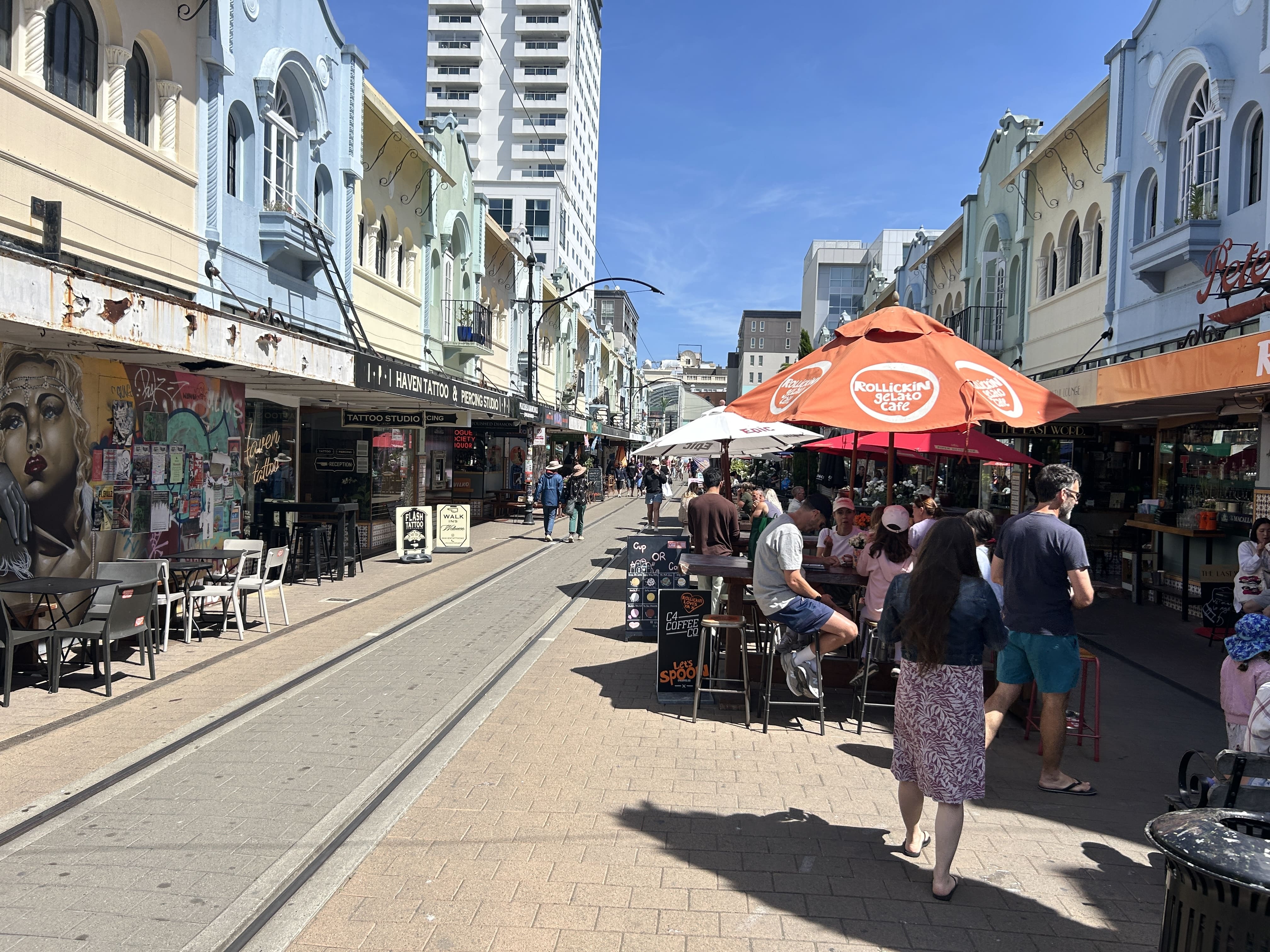
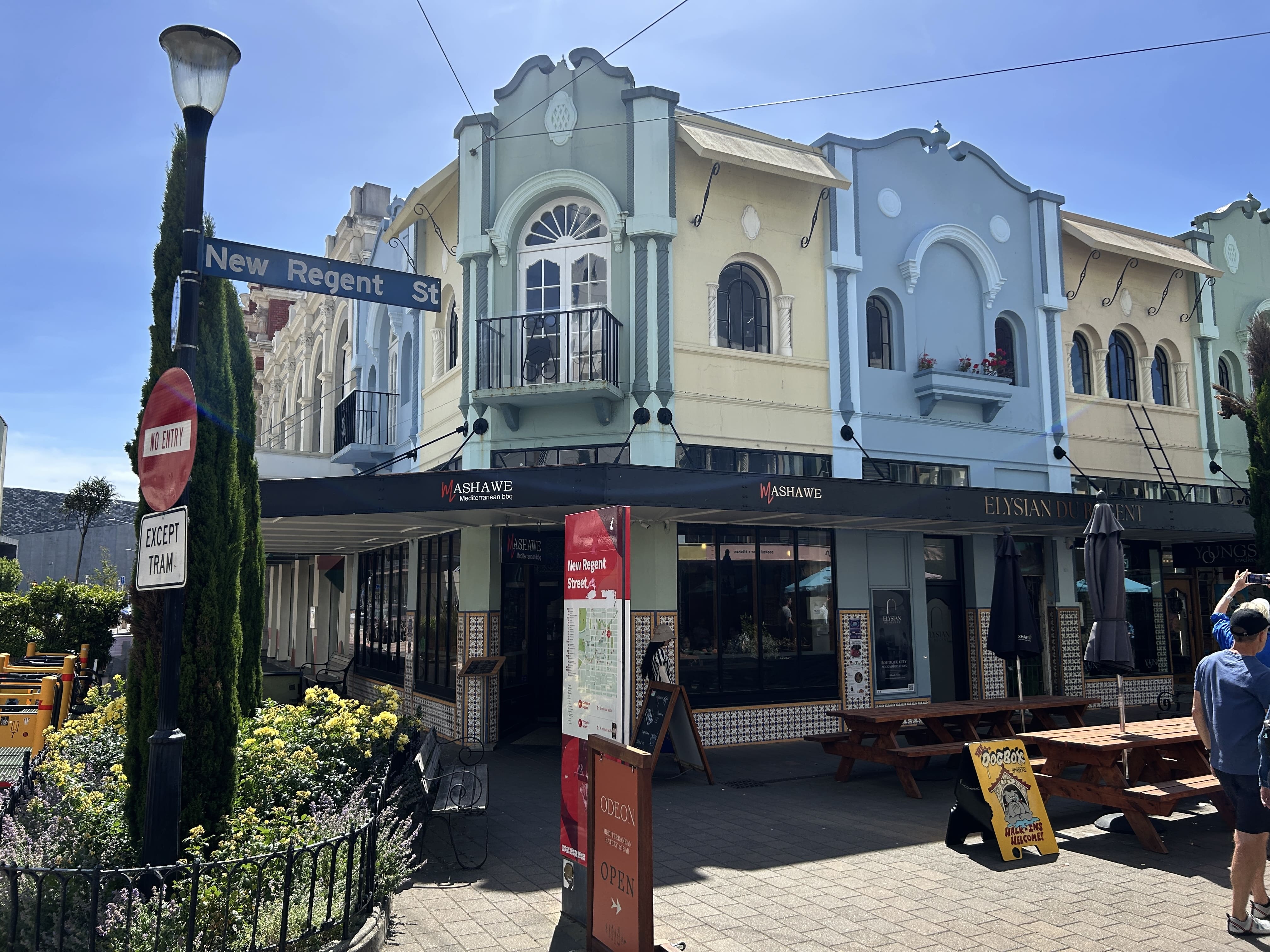
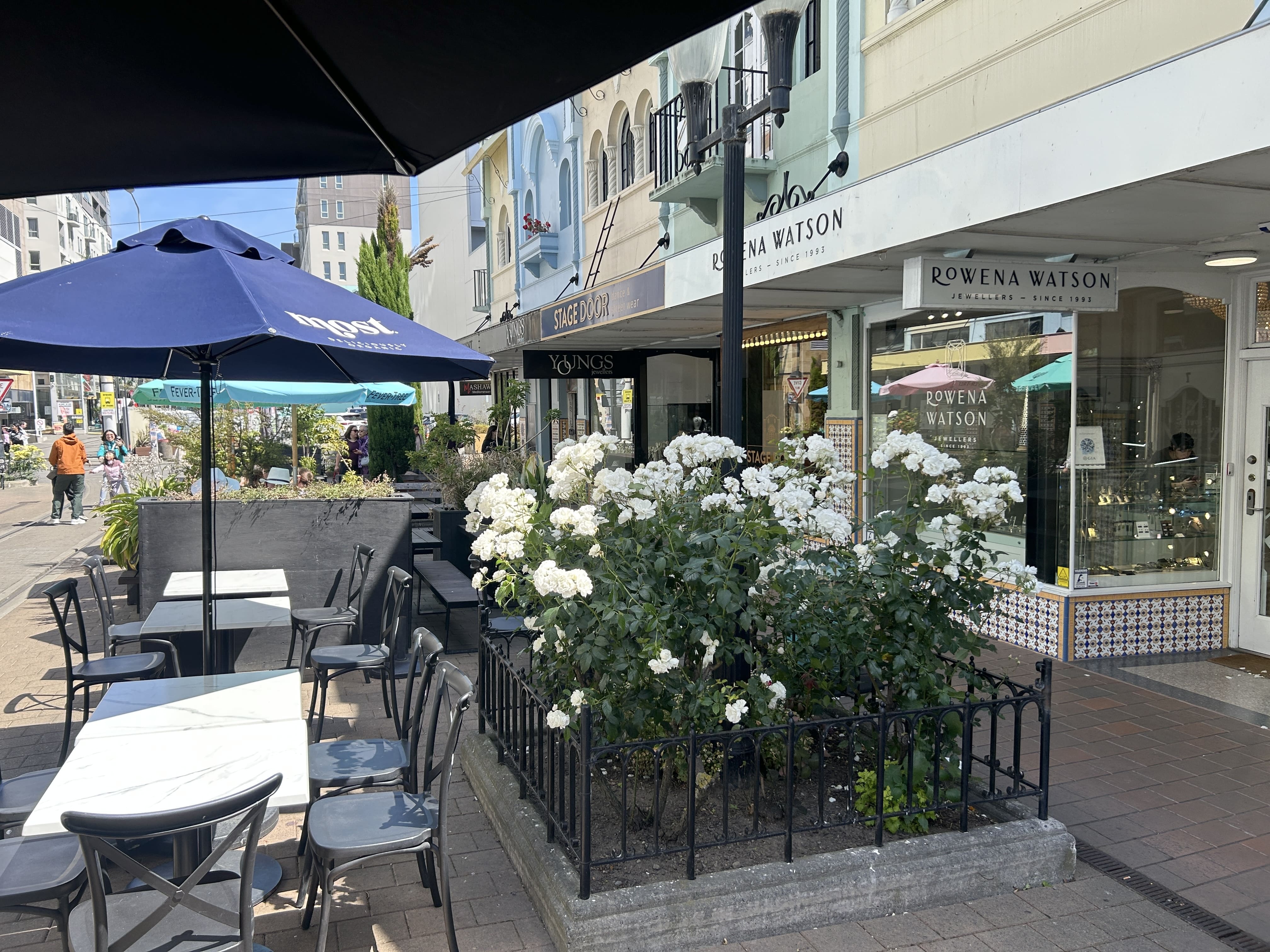
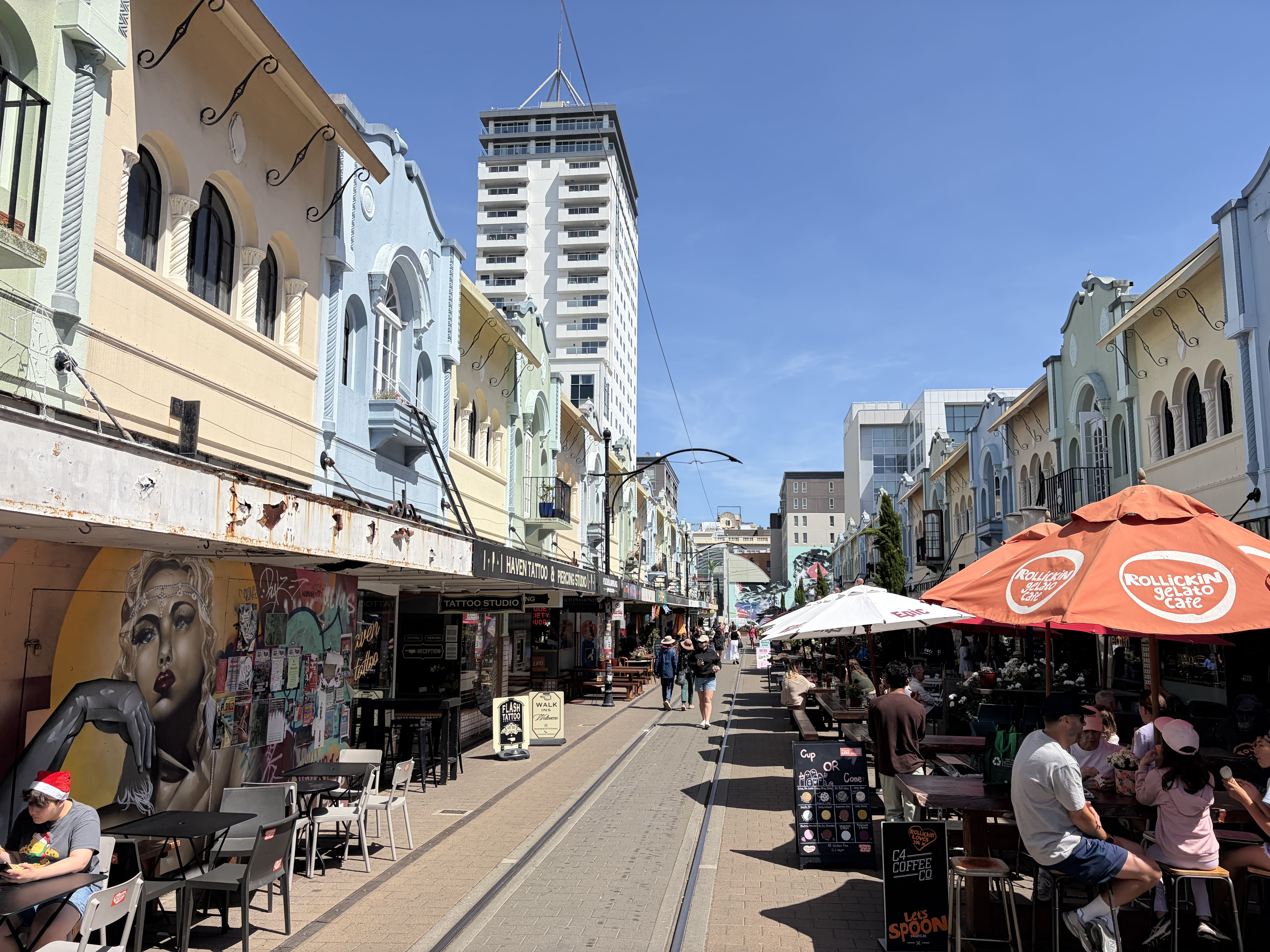
located in the heart of Christchurch, New Zealand, is
a vibrant pedestrian mall renowned for its distinctive
Spanish Mission-style architecture and rich history. It is
marketed as the "Soul of the City." Established in 1932,
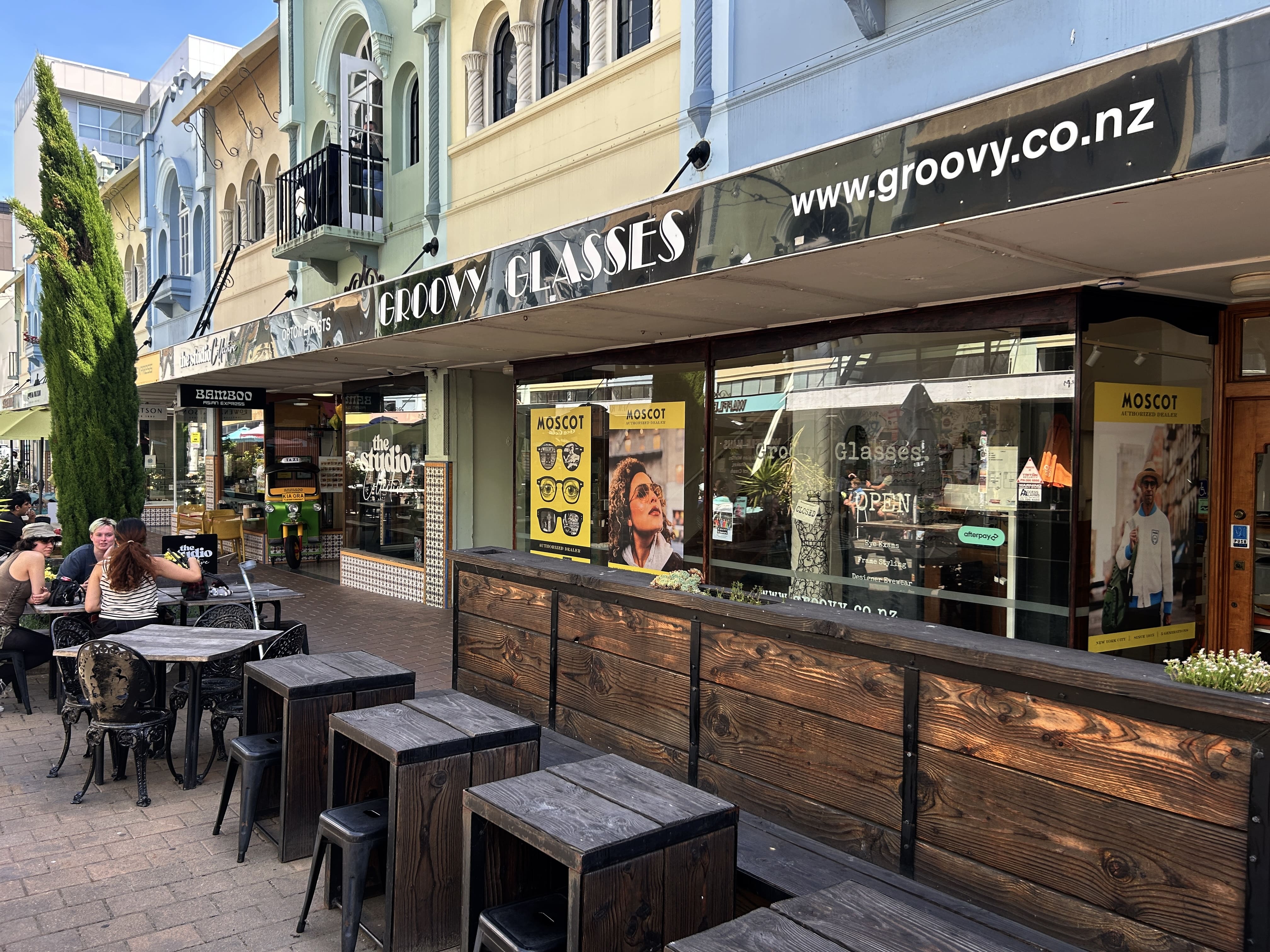
this charming street has much to offer visitors. The street is lined with a
variety of boutique stores offering everything from
fashion and jewelry to local crafts and souvenirs.
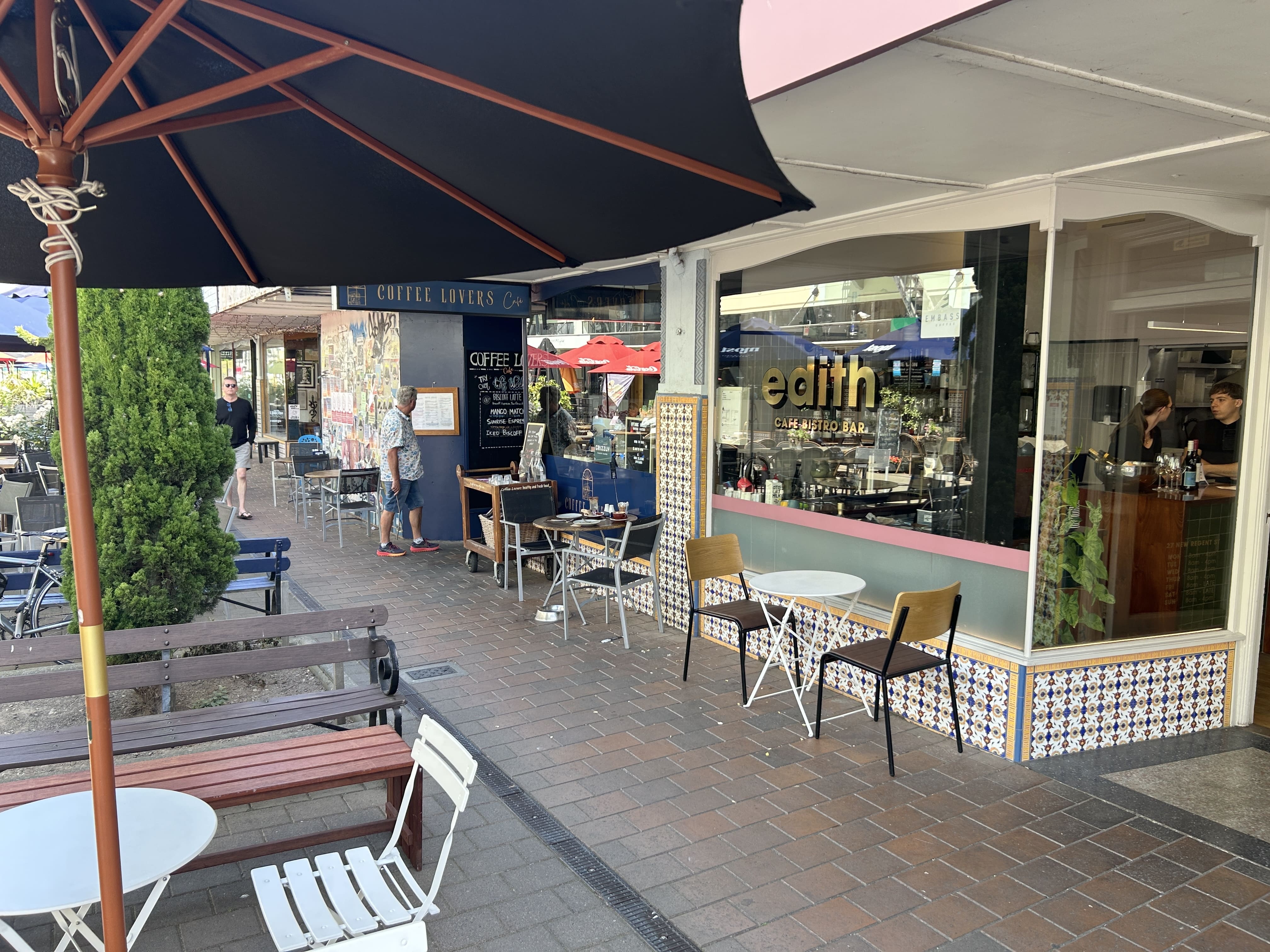
It has
numerous cafés and restaurants to satisfy your culinary
cravings, allowing visitors to enjoy a diverse range of
cuisines in a picturesque setting. The street often hosts various
forms of entertainment, from street performers to special
events, adding to its lively ambiance. It is also a good
place to board the historic tram to visit many of
Christchurch's landmarks. Click here for a
sampling of all that New Regent Street has to offer. Below
is a video walkthrough of New Regent Street by菲常旅程,
and below that some images ofNew Regent Street.
Video Walk Down New Regent Street
Scenes from New St. Regents Street (click in photos to enlarge)
Our Last
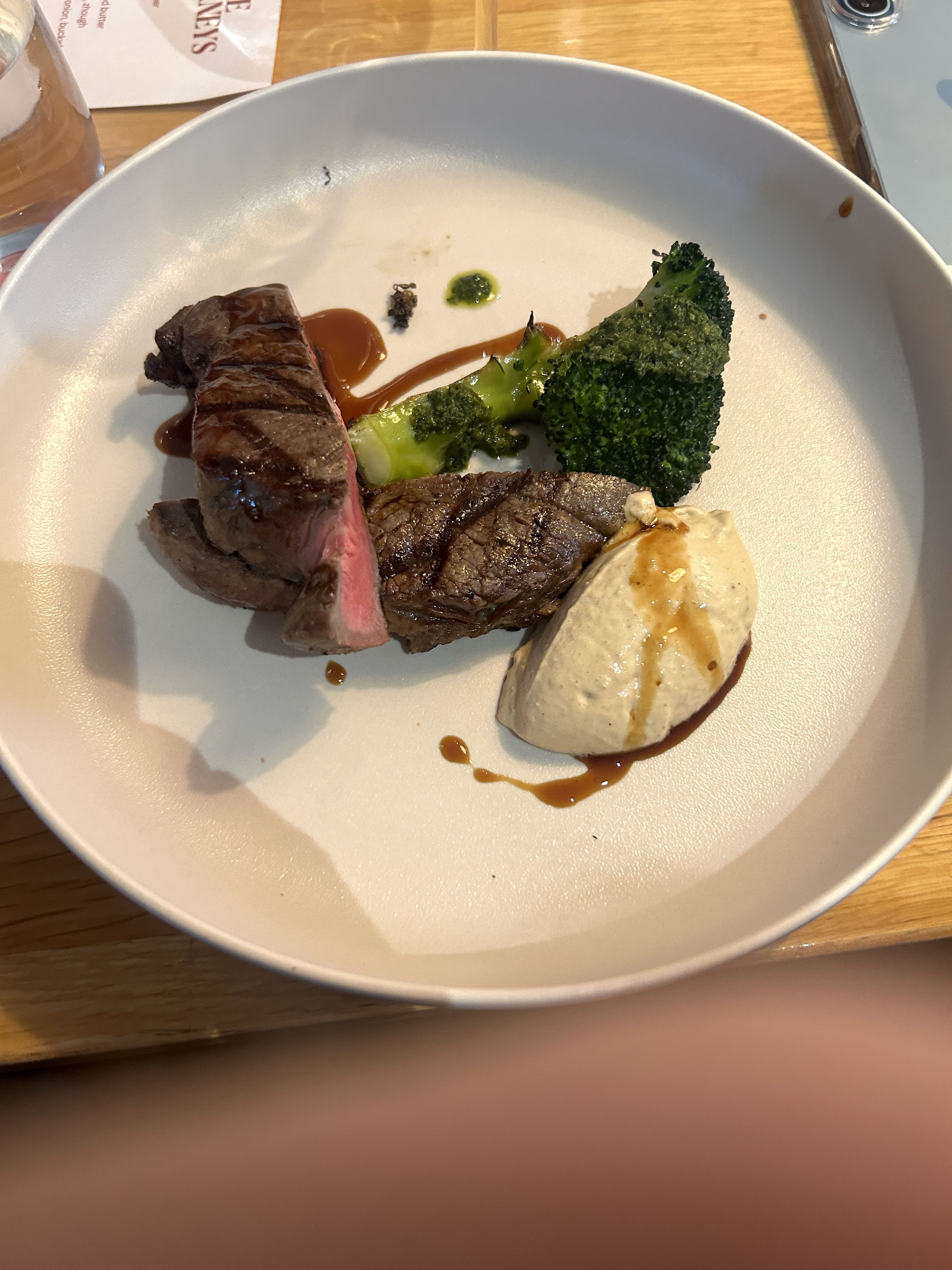
Supper After resting up a bit from our
full day of sightseeing, we met the group in the lobby
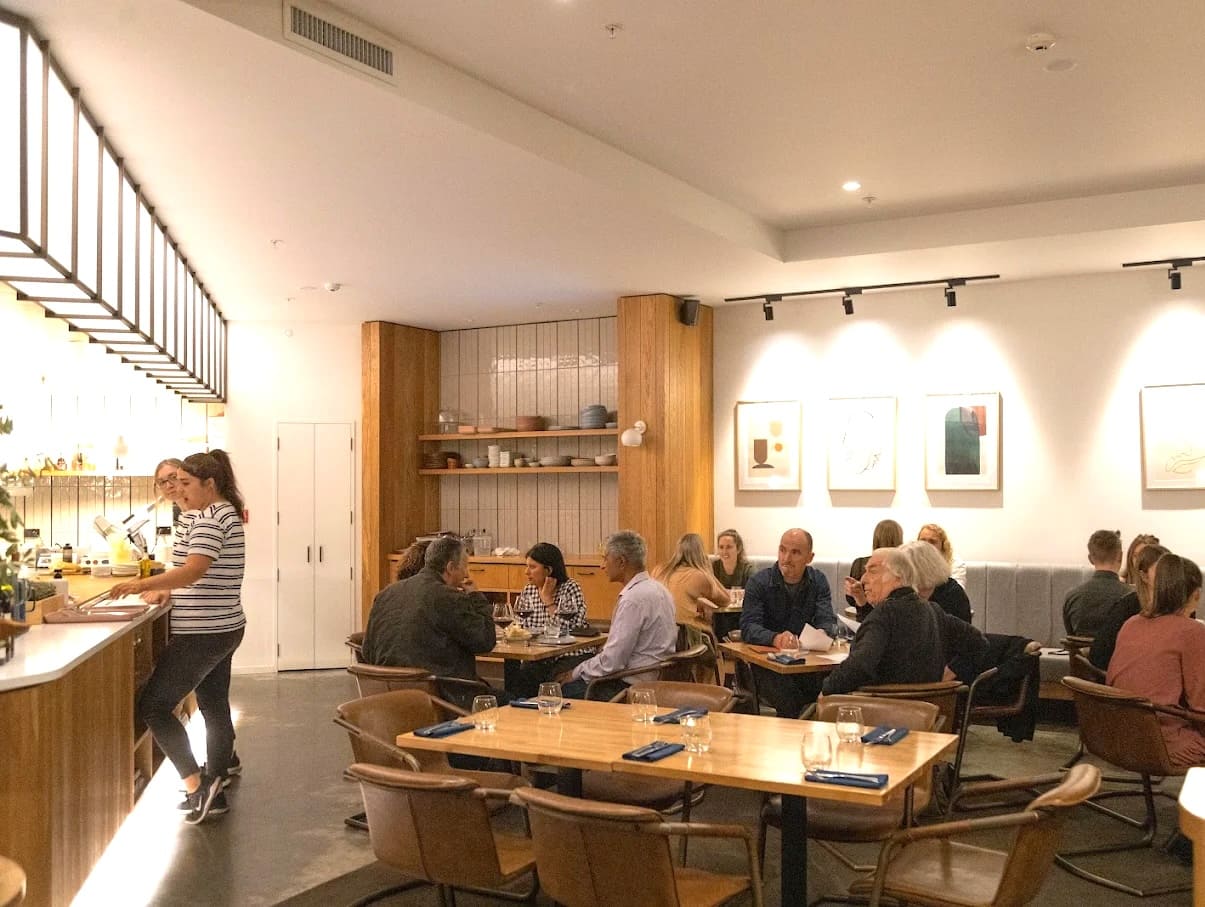
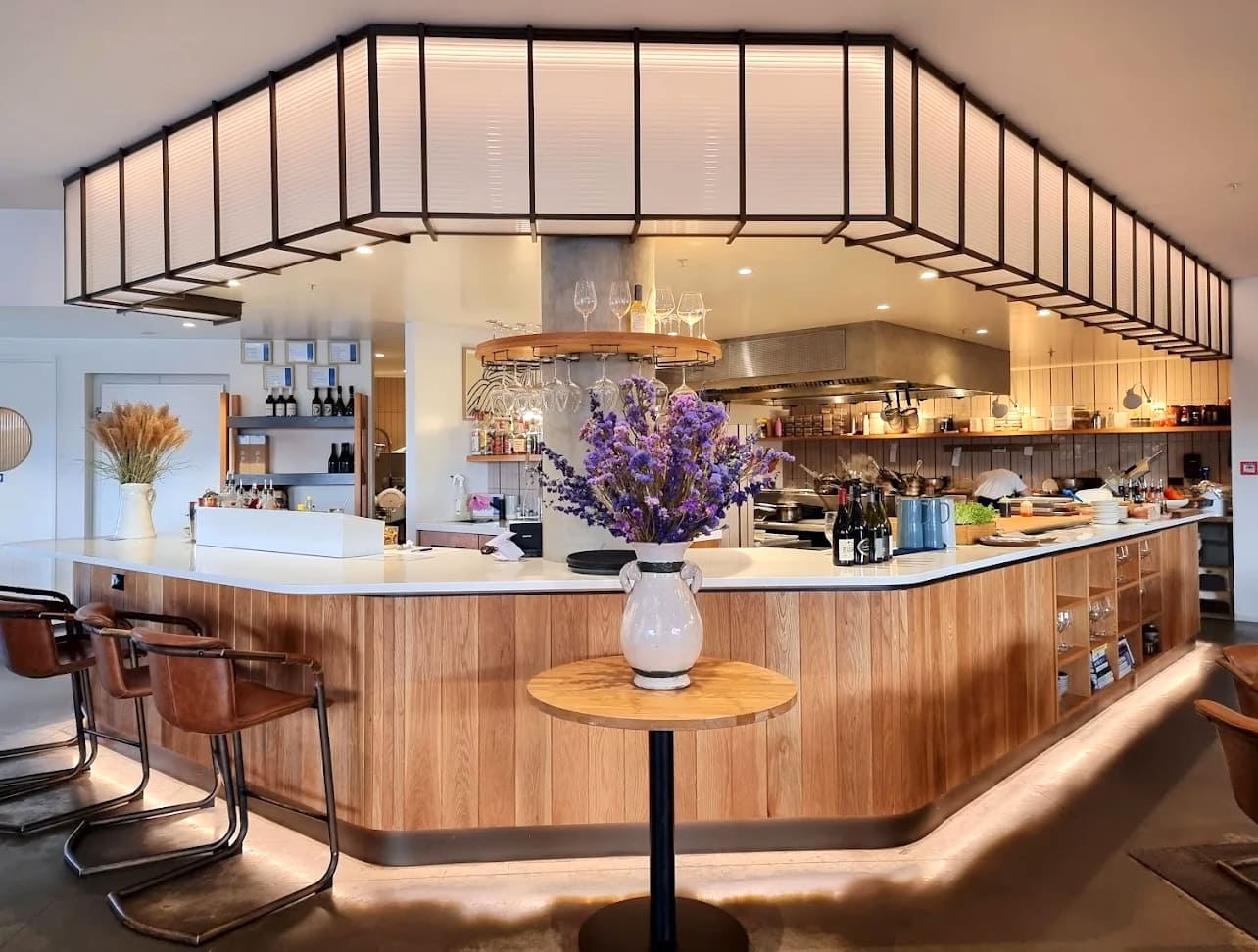
and walked along windy streets to reach Earl's Bistro
and our last night with the group. While we were
departing in the morning, most of the group was taking
the TranzAlpine train over to the west side of the
South Island, followed by a bus ride to Queenstown,
where their trip would end. Writing this over a
month after the tour, we can't recall too much of the
evening--the tenderloin was good, the company was
better, and the waiters all wore striped shirts,
leaving us to wonder if this is how Venetian
gondoliers make money in the off season? They could
have been mimes, but they couldn't have then taken our
drink orders.
 Christchurch, known as the "Garden
City" of New Zealand, is a vibrant blend of urban innovation
and natural beauty. One of its most popular attractions is
the Christchurch Botanic Gardens, a sprawling oasis filled
with native plants, colorful flower beds, and tranquil
walking trails along the Avon River. The city also boasts
the iconic Christchurch Cathedral in the square of the same
name, an architectural marvel with a storied history and
striking Gothic Revival design. History comes alive at the
Canterbury Museum, where visitors can explore exhibits on
Maori cultures, Antarctic Expeditions, and local wildlife.
The Quake Museum documents the effect of the devastating
earthquake that his Christchurch on February 22, 2011. In
the downtown area New Regent Street and Riverside Market are
frequent haunts for food lovers. Just outside of town is the
Christchurch Gondola, offering panoramic views of the area
from Mount. Cavendish, including Lyttelton Harbor, the
gateway to Antartica. Our aim was to visit as many of these
as we could using the Christchurch Heritage Tram, which
starts its loop right outside the Fable Hotel.
Christchurch, known as the "Garden
City" of New Zealand, is a vibrant blend of urban innovation
and natural beauty. One of its most popular attractions is
the Christchurch Botanic Gardens, a sprawling oasis filled
with native plants, colorful flower beds, and tranquil
walking trails along the Avon River. The city also boasts
the iconic Christchurch Cathedral in the square of the same
name, an architectural marvel with a storied history and
striking Gothic Revival design. History comes alive at the
Canterbury Museum, where visitors can explore exhibits on
Maori cultures, Antarctic Expeditions, and local wildlife.
The Quake Museum documents the effect of the devastating
earthquake that his Christchurch on February 22, 2011. In
the downtown area New Regent Street and Riverside Market are
frequent haunts for food lovers. Just outside of town is the
Christchurch Gondola, offering panoramic views of the area
from Mount. Cavendish, including Lyttelton Harbor, the
gateway to Antartica. Our aim was to visit as many of these
as we could using the Christchurch Heritage Tram, which
starts its loop right outside the Fable Hotel.